



When a brand asks for a custom gummy shape, the conversation often begins with artwork: a bear, fruit, star, logo or completely new outline. The shape looks like a design decision. In an industrial gummy factory, it is also a process decision.
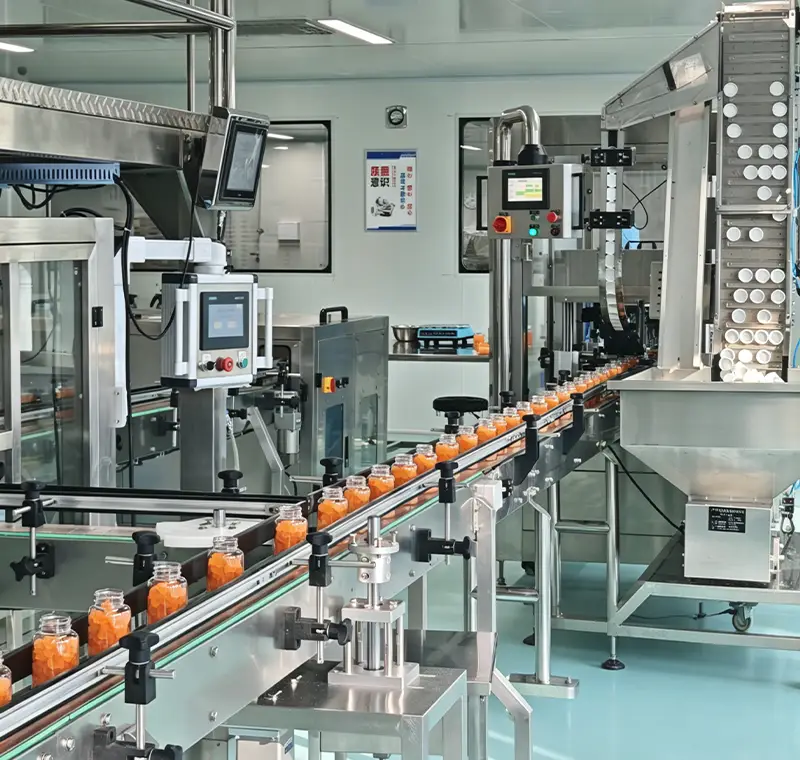
One established method is starch moulding on a mogul line. Trays are filled with conditioned starch, a printing board presses rows of cavities into the starch, cooked gummy mass is deposited into those impressions, and the filled trays move to controlled curing. After the gummies set, the line separates product from starch, cleans the pieces and returns the starch for conditioning and reuse.
That sequence gives brands useful flexibility in shape and formulation, but it also creates technical questions about deposit weight, starch condition, tray accuracy, curing time, cleaning and finishing. Understanding the process helps a buyer write a better brief and evaluate samples more realistically.
What the starch is doing
In this process, starch is not simply dust around the gummy. It forms the temporary mould cavity and helps manage moisture at the surface while the deposited mass sets. The starch bed must be prepared to a controlled condition before printing. If it is too dry, too moist, uneven or poorly levelled, cavity definition and product release can suffer.
The mould shape is created by a printing board or stamp with repeated positive forms. It presses into the prepared starch tray and leaves negative cavities. The depositor then places a measured quantity of gummy mass into each cavity.
After curing, the tray is emptied and gummies are separated from starch. Residual starch is removed before oiling, sanding or another finishing step. The recovered starch passes through cleaning and conditioning before returning to the line. Starch handling is therefore part of production control, not a background housekeeping task.
A custom shape needs production geometry
A logo that looks attractive on a screen may not release cleanly from a starch cavity. Very thin points, deep undercuts, narrow channels and tiny raised details can break, fill poorly or disappear during finishing.
The design review should consider:
- target piece weight and overall dimensions;
- minimum wall and feature thickness;
- draft and release from the starch cavity;
- how the gummy settles or changes during curing;
- orientation on the printing board;
- space between cavities;
- inspection and packaging after demoulding.
Simplifying a fine detail does not necessarily weaken the brand design. A slightly bolder symbol may produce a cleaner, more recognizable gummy at commercial speed. The manufacturing drawing should define the approved dimensions, weight target and acceptable visual range.
Prototype tooling and hand samples are useful, but the final approval should account for production-scale depositing and curing. A shape that works in one laboratory cavity still needs consistent results across a full tray.
Depositing links formula behavior to equipment
The cooked gummy mass must arrive at the depositor within a workable range for temperature, viscosity and gel development. If it flows too freely, the deposit may spread or create tails. If it thickens too early, filling accuracy and surface quality may suffer.
Active ingredients, colors, acids and flavors can change the behavior of the mass. A nutraceutical gummy is not automatically equivalent to a standard confectionery recipe. High powder loads may raise viscosity or introduce particles. Some ingredients need to be added later in the process to reduce unwanted exposure, but the sequence still has to support uniform mixing.
Depositor settings, nozzle design, pump condition and line speed all affect piece weight. Production teams monitor and adjust the system against the product specification. For a brand, this is why “same mould” does not guarantee that two different formulas will run identically.
Curing is part of the formula
Filled trays typically move to a controlled area where time, temperature and humidity support setting and moisture adjustment. Curing is not passive storage. It helps determine final chew, surface condition, release and packaging readiness.
Piece size, gelling system, solids, acids and active load can all change the required profile. Removing trays too early may leave a gummy soft or difficult to clean. Excessive curing can make the texture firmer than intended or affect production yield.
The target should be written in terms of finished-product attributes, not only a fixed number of hours. Texture, moisture and water activity where applicable can provide more useful release information than the clock alone. A scale-up trial helps confirm whether the laboratory expectation translates to tray stacks and actual room loading.
Starch conditioning needs its own controls
Recovered starch carries heat and moisture from the process. It must be separated from product, screened and conditioned before reuse. Foreign-material prevention and allergen controls need to reflect the products running on the line.
Factories should define how starch condition is monitored, how the system is cleaned, how product changeovers are managed and how damaged or unsuitable starch is removed. The exact program depends on the equipment, product range and food-safety plan.
A buyer does not need to operate the mogul, but should understand that consistent moulding depends on this supporting system. During an audit or technical discussion, ask how starch moisture, screening, circulation and housekeeping are controlled.
Demoulding and finishing change the final appearance
After curing, trays are emptied and the gummies are separated from starch. Cleaning equipment removes loose starch, but the product may still look matte at that stage. Oiling can add gloss and reduce sticking. Sugar or sour sanding creates a different surface and may require steam or another adhesion step.
The chosen finish affects more than appearance. It changes flavor release, sweetness, handling and label ingredients. A coating can also alter piece weight, so the specification needs to state whether the target includes the finish.
Design samples should be reviewed after the same finishing process intended for production. An uncoated laboratory gummy is not a reliable appearance reference for an oiled or sanded commercial product.
Where a starch mogul adds flexibility
Starch moulding can support a wide range of gummy and jelly concepts, including different gelling systems, shapes, colors and certain filled or layered designs depending on the line configuration. For a private-label brand, the useful advantage is not “unlimited customization.” It is a structured route from approved tooling and formula to repeated tray-based production.
The quotation should therefore distinguish standard shapes from custom tooling, ordinary mono deposits from more complex formats, and pilot work from commercial production.
What to include in a starch-moulded gummy brief
A useful buyer brief includes:
- destination market and product category;
- gelling preference and dietary requirements;
- active ingredients and target amount per serving;
- gummies per serving and target piece weight;
- shape reference with dimensions, not only an image;
- color and flavor direction;
- finish: oil, sugar, sour sanding or another option;
- expected bottle or pouch count;
- packaging and shelf-life target;
- forecast quantity and launch timing.
The factory can then assess whether the shape, formula and serving fit one another. If the proposed gummy is too small for the active load, tooling should not be approved before the formula question is resolved.
Questions to ask during sample approval
Look at more than the front face of one perfect piece. Review several gummies from the batch for weight, thickness, cavity detail, surface marks, tails, bubbles and coating consistency. Check how the shape survives bottle filling and transport.
Keep the approved shape drawing, printing-board reference and sealed product sample together. A photograph alone may hide thickness, texture and weight.
FAQ
Is a starch mould the same as a reusable silicone mould?
No. In a mogul process, cavities are printed into prepared starch trays for each cycle. The printing board is the durable tooling that recreates the shape.
Does starch remain in the finished gummy?
The product is separated and cleaned after curing, although trace surface starch may be part of the process reality. Finished-product ingredients and allergen statements must reflect the actual formula and controls.
Can every logo become a gummy shape?
Not every detail will translate well. The design may need thicker features, simplified lines or different dimensions for accurate depositing and release.
Equipment matters when it is connected to process control
A starch mogul gives a factory an established platform for moulding gummies at scale. Its value comes from the complete system: conditioned starch, accurate printing, controlled depositing, curing, separation, cleaning and finishing.
For brands, the practical benefit is better product planning. Shape, piece weight, formula and finish can be reviewed as one manufacturable design rather than separate creative choices. Red Kangaroo’s factory capabilities include starch-moulded gummy production alongside formula development, sampling and packaging support. Bring the product geometry into the first technical conversation, and the final gummy has a better chance of looking as good on the line as it did in the concept artwork.