



Choosing a magnesium form for a gummy is a formulation decision rather than a simple benefit ranking. Glycinate, citrate, oxide and malate bring different compound weights, elemental-magnesium contributions, sensory behavior, dispersion considerations and documentation needs. The right comparison asks which form fits the intended product, serving plan and target market.
Red Kangaroo develops gummy concepts for brands that need a clear path from ingredient brief to prototype. The OEM magnesiu m glycinate gummy page provides product context, while a new project still needs a formula-specific review of the chosen form, serving and label.
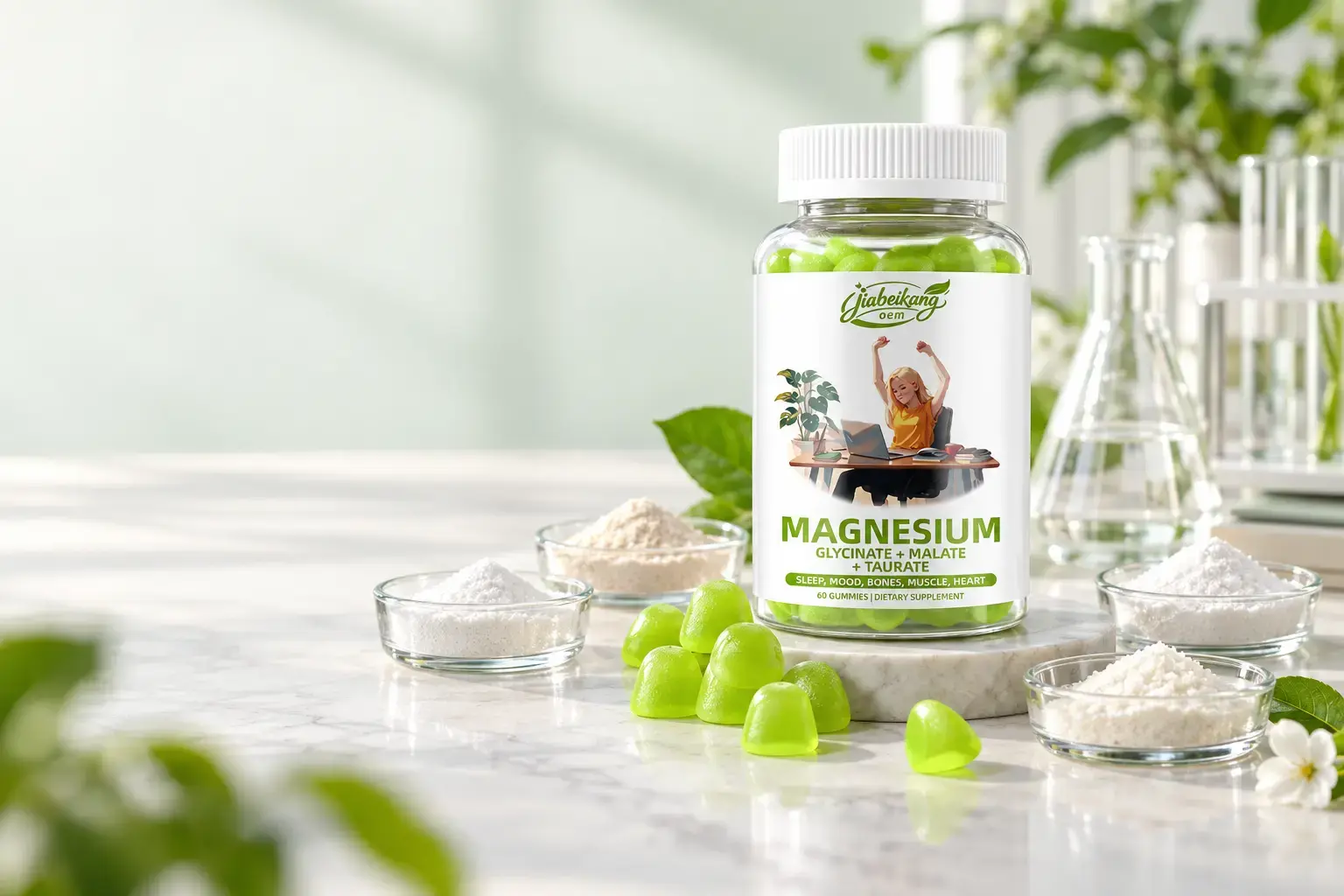
Start with elemental contribution, not compound weight
A magnesium compound and the elemental magnesium it contributes are different quantities. A comparison that lists only the compound weight can make two forms look equivalent when they occupy different amounts of the gummy payload. The formula team should record the intended elemental target, the selected raw-material form and the supplier’s verified assay information.
Do not turn this comparison into a universal dose recommendation. The product team must confirm the target market, serving plan and permitted label position. The useful question for a prototype is how the selected form affects material mass, piece count and the rest of the gummy system.
Create a form matrix with columns for elemental contribution, raw-material mass, documentation, sensory risk, dispersion or solubility observations, serving impact and open technical questions. Leave unsupported values blank until the supplier or technical team verifies them.
Compare glycinate, citrate, oxide and malate as formula inputs
Magnesium glycinate, citrate, oxide and malate are not interchangeable ingredients simply because they share the word magnesium. Their compound structures and commercial specifications can change the amount of material needed, the sensory profile, the way the ingredient disperses and the packaging or label discussion.
The comparison should hold the product job and serving concept steady. Ask what each candidate contributes to the formula, what documentation is available, how it behaves in the selected base and which risks need a bench sample. Avoid declaring a winner based on a consumer benefit headline or a single supplier description.
For a brand, the practical output is a shortlist with a reason. One form may fit the payload but create a stronger taste challenge. Another may fit the sensory target but require a different serving architecture. The matrix makes that trade-off visible.
Map sensory risks before flavor selection
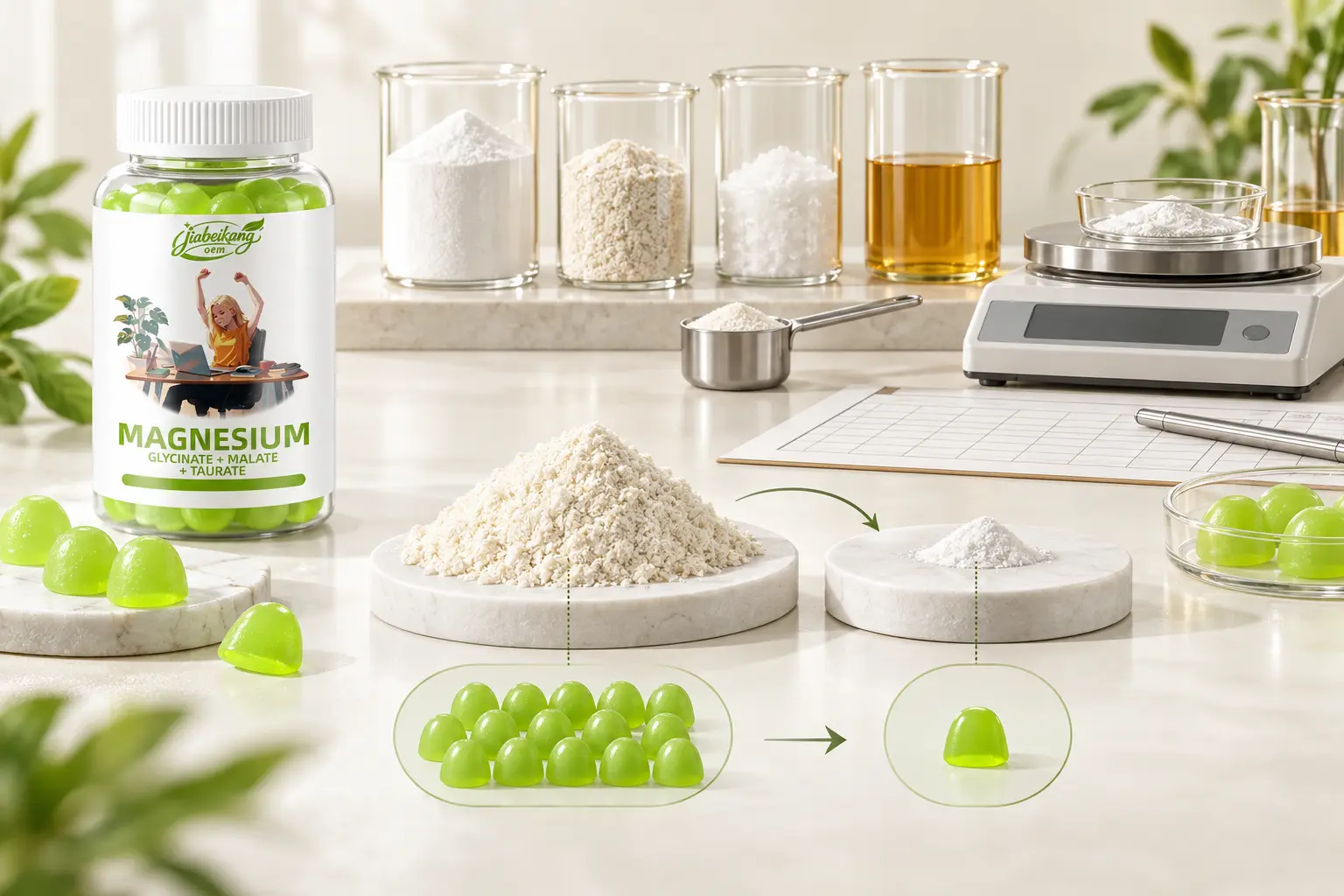
Magnesium ingredients can introduce bitterness, mineral notes, astringency or a different mouthfeel. The result depends on the form, amount, base, acid system, flavor, sweetener, texture and serving count. A flavor chosen before the form is understood can hide the real source of a problem.
Prepare a small sensory plan that records the form, supplier lot, base, flavor direction, serving count and observation time. Compare candidates under the same conditions. Record taste, aftertaste, chew, surface and any visible change rather than relying on an overall preference score.
Le magnesium gummy product range can support a product conversation, but the final flavor and texture decision remains formula-specific. Do not promise that any form will be naturally pleasant or that one masking system will solve every profile.
Check payload, serving count and package architecture
The ingredient mass affects piece size, number of pieces per serving, package count and label instructions. Compare the selected form under the intended gummy size and serving options. If the payload is too large for the desired piece, the brand may need more pieces, a different format or a lower-priority formula.
Review the package concept at the same time. A bottle count that looks attractive in a sales mock-up may create an impractical serving instruction or an awkward production plan. Keep the chosen market, serving language and label structure in the matrix.
Do not estimate cost, capacity or shelf life from the form alone. Those depend on the complete formula, supplier specification, process, packaging and commercial plan.
Review dispersion, acid interaction and process questions
Ask the technical team how each candidate is expected to behave in the selected gummy base. Relevant questions may include dispersion, interaction with the acid system, color, moisture exposure, heat or hold time, and the effect on texture. These are questions for a controlled prototype, not claims to publish without evidence.
Separate verified supplier information from an illustrative development plan. If a candidate requires a different addition step or a special handling instruction, record that requirement before the sample is made. If the information is unknown, keep it as an open item rather than filling the gap with a general assumption.
Build the supplier-document checklist
For every magnesium form, request an identity and specification file appropriate to the target market. Depending on the material and project, the file may include assay or elemental contribution, certificate of analysis, contaminants information, allergen statement, origin, storage, shelf-life basis and lot traceability.
Check that the documents identify the same material and supplier as the sample. Record the lot and issue date. A complete file supports qualification, but it does not prove that the ingredient will deliver the intended sensory or processing result in a new gummy formula.
Le gummy testing and stability article can help organize the broader pre-production record. Market-specific label and compliance questions should still be verified for the intended US or European route.

Use a prototype decision matrix
Rank each candidate against the same questions: Does it fit the elemental target and realistic piece count? Can the sensory profile be managed in the intended flavor? Is the form documented for the target market? Does it disperse and process as required by the development plan? Can the supplier repeat the specification and provide lot records?
The matrix should identify a preferred route, a backup route and the evidence needed to move from one to the other. It should also show what remains unapproved. This protects the brand from treating an early bench preference as a final production decision.
Avoid medical superiority language. The article is about gummy feasibility and supplier qualification, not about treating a condition or advising an individual on magnesium intake.
Send a complete magnesium gummy brief
Share the desired elemental-magnesium target, chosen candidate forms, serving count, gummy size, flavor direction, package concept, target market and expected order quantity through the service page. Add the supplier documents and any known process restrictions so the development team can compare candidates on the same basis.
For a formulation discussion and quotation route, send the matrix and unresolved questions through the contact page. A clear comparison helps Red Kangaroo decide whether to advance one form, test two candidates or move the product to another dosage format.
Treat the first comparison as a controlled screen
The first magnesium comparison is a screening step. Use the same gummy base, flavor direction, piece size, preparation route and observation window for the candidate forms. Label each sample with the form, supplier lot and formula version, then record the sensory and processing observations in the same matrix.
If one candidate looks better, ask what evidence is still missing before making a commercial decision. The remaining work may include a repeat sample, document review, package check, target-market label review or a stability plan. Keep the preferred route and the backup route visible until the required evidence is complete.
This approach gives the brand a practical decision trail. It also lets Red Kangaroo explain why a form was advanced, reformulated or moved to another product concept without turning an early bench result into a universal claim.
The final selection should be recorded as a development decision with an owner and next evidence step. That keeps the comparison useful for sourcing, quality and packaging teams when the prototype moves toward a commercial quotation.
A documented review also gives the buyer a clear decision record for the next production or maintenance step.