



An adult multivitamin gummy often starts with a familiar tablet panel and then runs into the physical limits of a chewable format. Nutrient mass, mineral taste, interactions, process exposure, serving count and label space all compete for room in the same product. A better brief ranks the product’s priorities before the first sample is made.
Red Kangaroo helps brands review gummy concepts for the target market, package and serving plan. The women’s multivitamin gummy range and men’s multivitamin gummy range show why the product brief should define the intended consumer and label architecture instead of copying a generic nutrient list.
Mistake 1: Copying a tablet panel into a gummy
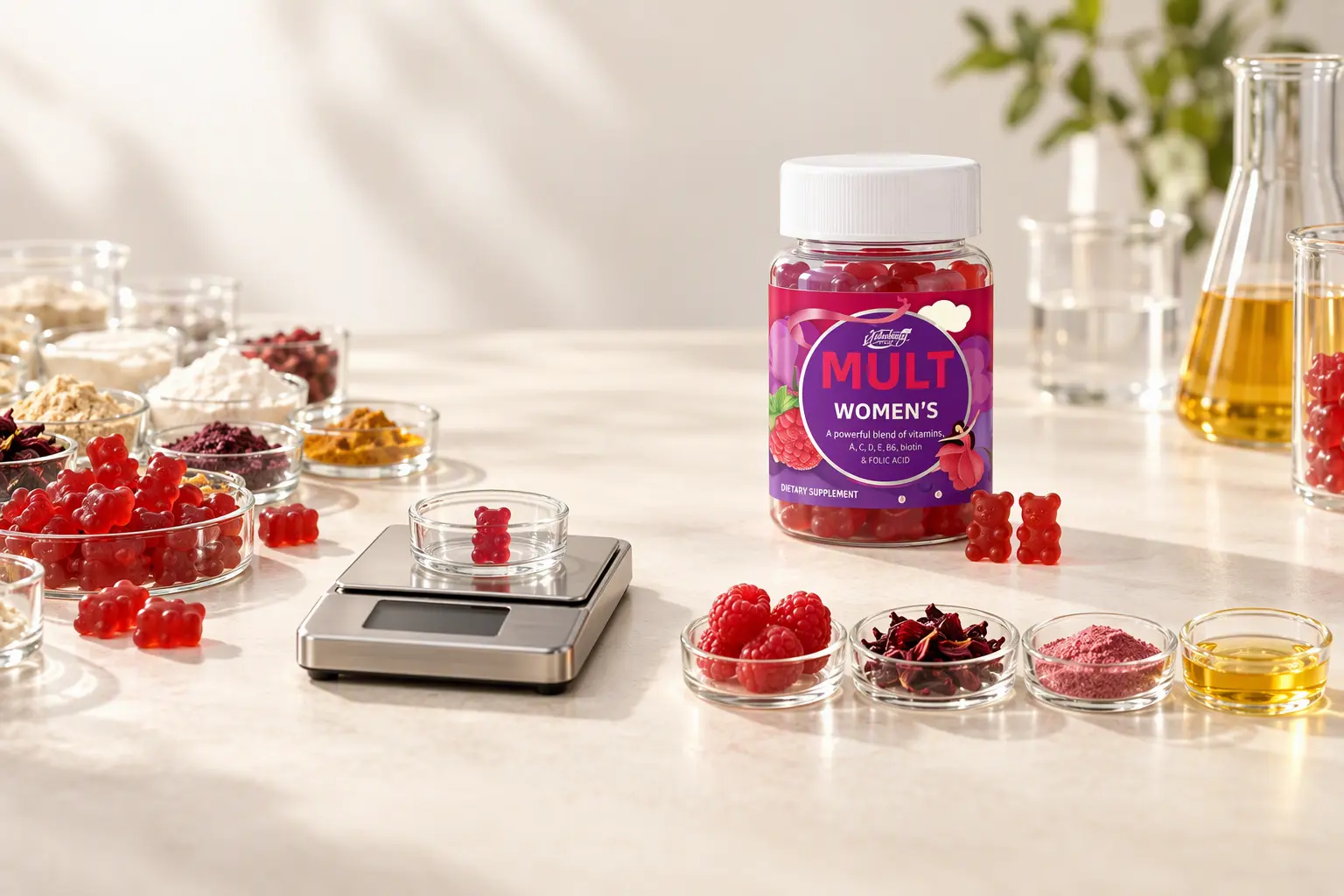
Tablets and gummies have different physical constraints. A brand that transfers every ingredient from a tablet concept may create an oversized piece, too many pieces per serving or a raw-material load that leaves little room for the gummy base, flavor and texture system.
Begin with the product job. Decide which nutrients are essential to the positioning, which support the concept and which can wait for a second SKU. Then convert each proposed nutrient form into the raw-material mass the prototype must handle. The goal is not to publish a universal dose; it is to see whether the brief fits the chosen format and serving plan.
Keep the first prototype focused enough to learn from. If the formula contains too many variables, a sensory problem or stability issue becomes difficult to trace back to one ingredient.
Mistake 2: Ranking benefits before payload and label space
A benefit headline does not tell the formulator whether a nutrient is practical in the gummy. The brief should rank hero ingredients, supporting ingredients and optional ingredients, then test how their compound weight, carrier and serving contribution affect the piece.
Label architecture matters at the same time. Each nutrient needs a clear name, amount, unit and market-appropriate declaration. A formula that cannot be explained cleanly may become difficult to review, even when the nutrient list appears attractive.
Ask the team to review the nutrient priority list, raw-material mass, serving count and panel structure together. A change to one can force a change to the others.
Mistake 3: Treating mineral taste as a late-stage flavor problem
Minerals can contribute bitterness, metallic notes, chalkiness or astringency. The effect depends on the form, amount, base, acid system, flavor direction and masking approach. Waiting until a late sample to discuss taste makes the correction more expensive.
Set a sensory risk map during the brief stage. Identify ingredients that may drive taste, color or mouthfeel, then decide which observations belong in the first bench sample. Keep the comparison fair by recording the formula version, flavor, serving count and preparation conditions.
Do not promise that a single flavor masks every mineral profile. The right choice is formula-specific and should be confirmed through the prototype process.
Mistake 4: Ignoring compatibility and process exposure
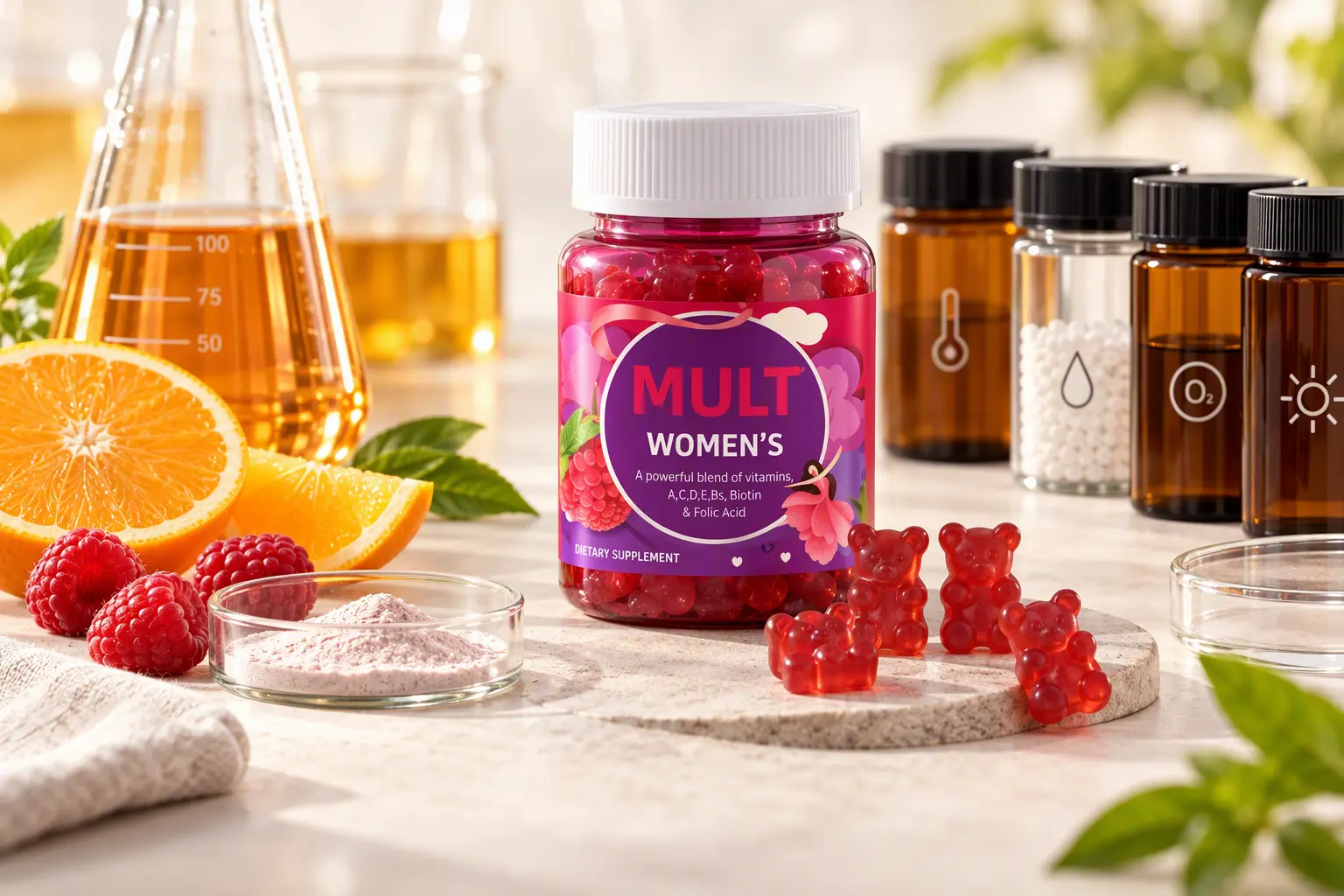
Some ingredients are sensitive to heat, moisture, oxygen, light or contact with other components. A multivitamin brief should identify these risks before the manufacturing route is fixed. The question is not whether an ingredient is popular; it is whether the selected form can move through the intended process and remain suitable for the target product.
Create a compatibility map with the technical team. Mark possible oxidation, color change, acid interaction, dispersion or texture concerns. Separate verified processing information from assumptions and leave unsupported thresholds out of the customer-facing article and brief.
If two nutrients create a conflicting sensory or process problem, consider moving one to another SKU or dosage form. Simplification is often more practical than adding another masking layer.
Mistake 5: Choosing the serving count after the formula
The number of gummies per serving affects payload, consumer experience, bottle count, directions and cost. It also affects how much room is available for a flavor and texture system. Treat serving architecture as an early decision with a clear reason.
Compare a small number of serving options using the same nutrient priority list. Record piece size, number of pieces, package count, label language and any sensory trade-off. Do not imply that one serving count is medically correct; the product team must confirm the intended market and regulatory position.
Cel/Cea/Cei/Cele ghid de testare și stabilitate a gumelor can help organize pre-production questions, while formula-specific compatibility still requires technical review.
Mistake 6: Leaving the label and market review until the end
US and European markets can differ in ingredient naming, nutrient declarations, claims and required records. The target market should be recorded in the brief before the prototype is approved. A formula may be technically workable yet need a different label architecture or documentation plan for another market.
Review proposed ingredients against the project’s approved and prohibited source files. Keep health language cautious and avoid turning the article or brief into medical advice. A product description should state what the formula is designed to contain, not promise treatment or prevention.
Use a formula simplification triage
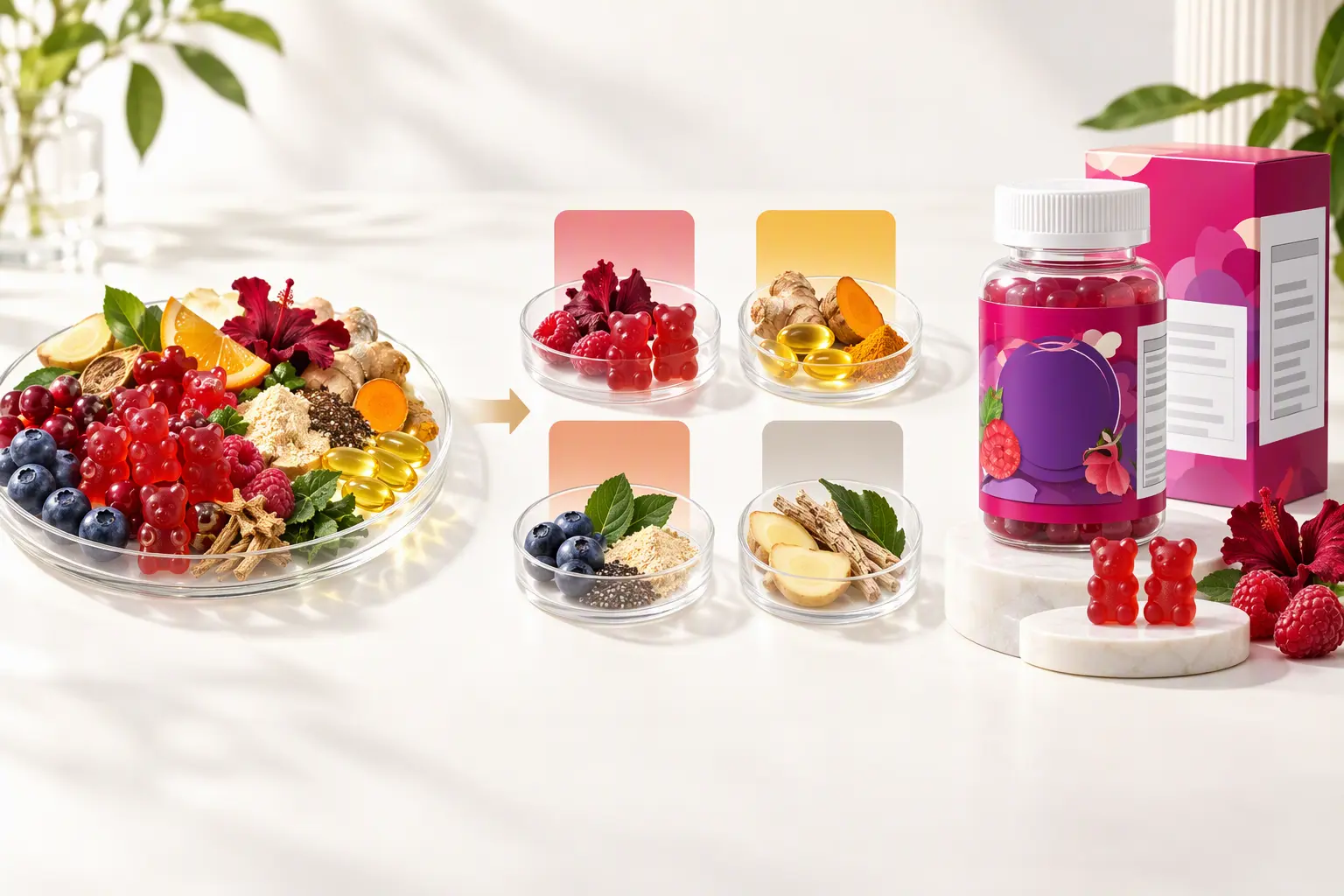
When a brief is overloaded, sort each ingredient into keep, reformulate, separate or defer. Keep the ingredients that define the product job. Reformulate where the selected form creates avoidable payload or sensory pressure. Separate ingredients that conflict in taste or process behavior. Defer low-priority additions that prevent a clear first prototype.
Write down the reason for every change and the evidence needed before the next sample. This keeps the team from adding ingredients back without understanding the trade-off. It also gives the brand a cleaner decision record when the formula becomes a second SKU.
Prepare a useful prototype request
Send the proposed nutrient panel, nutrient forms, target serving count, flavor direction, package concept and target market with the request. Identify the hero nutrient, the ingredients that require special technical review and the product claims the brand is considering. Red Kangaroo can then review feasibility within the agreed scope through the service page and move unresolved questions into the next sample round.
For a formula and packaging discussion, include the expected order quantity and target launch route through the contact page. A focused request makes it easier to decide which nutrients belong in the first gummy and which should move to another product format.
Separate formulation changes from claim changes
Every formula revision should trigger a short review of the label, claims, serving instruction and package copy. A change made to reduce payload or improve taste can alter the order of ingredients, the declared amounts or the wording the brand can support in its target market. Keep the revision number visible in the technical record and move the approved text with the approved formula.
Ask the team to review the prototype, specification, label draft and package mock-up together. A clean change record prevents a marketing file from describing an earlier formula. It also gives the quality team a clear basis for the next sample and for supplier communication.
When the first formula cannot carry every proposed nutrient, a focused product is easier to explain and test. Defer a low-priority ingredient with a documented reason, then decide later whether it belongs in a separate SKU. This protects the development schedule and keeps the customer-facing promise aligned with what the finished gummy can actually contain.
Keep the customer brief focused on one decision at a time. A clear first formula makes the next taste, texture and label review more informative than a broad concept that changes several variables at once. The development record should show which question each sample is intended to answer.
The brief should also state what the brand will measure in the first sample: taste, chew, piece appearance, serving practicality, label clarity or another defined question. A measurable review point gives the next development round a clear purpose and keeps the project moving toward a commercial decision.