



When a brand approaches us and says I want a special shape in my gummi, the discussion almost always starts with the artwork. A bear. Fruit. Star. Logo. Sometimes the shape is, in fact, something new. It appears to be a matter of design. In an industrial gummy plant there’s also another consideration at play: process. One proven approach is starch moulding on a mogul line. Here’s how it runs: Trays are loaded with conditioned starch. A printing board presses rows of cavities into that starch. Cooked gummy mass is injected into those cavities. Once those trays are filled, they are moved through controlled curing. After curing, the line detaches the product from the starch, cleans the product, and pumps the starch back to the beginning so it can be conditioned again. As a brand owner, you’ll have a lot of useful flexibility when it comes to shape and formulation, but such a process also brings plenty of questions. Deposit weight. Starch conditioning. Tray accuracy. Curing time. Cleaning. Finishing. Knowledge of the process brings clarity to the establishment of specifications and the evaluation of samples.
What starch really does
During this stage starch isn’t just dusting around the gummy. It’s the temporary mould cavity. It controls the moisture level at the surface of the part while the deposited mass solidifies. Before you set your board, you want your starch bed to be at the right condition: Not too dry? Not too wet? Not uneven? Not poorly levelled? The shape of the cavity isn’t recognisable and the product won’t come out easily. Now you have a form on your printing board (or stamp), which repeats several times in the course of a cycle, the form is pressed into the prepared starch tray, forming negative cavities. Your depositor delivers a specific amount of product into each cavity; after the gummies are cured, the tray discharges and the gummies are released from the starch. Any remaining starch is eliminated before the gummies are oiled, shaped, painted or finished in any other way. The recovered starch receives additional cleaning and conditioning then cycles back into the process. Starch handling is then an aspect of production management, not background housekeeping.
A custom shape needs production geometry
That nice looking logo on a screen may not release well from a starch cavity. Very thin features, deep undercuts, narrow channels and tiny raised detail tend to break, fill poorly, disappear during finishing, all things the design review should take into account: Desired part weight and overall dimensions. Minimum wall thickness and minimum feature thickness. Draft and release from the starch cavity. How the gummy settles or shifts during curing. Orientation on the printing board. Separation between cavities. Inspection, packaging after demoulding. Simplifying a fine detail does not remove the essence of the branding design. Making the symbol a little more bold may result in a cleaner gummy with easier recognition and release at production rate. The production drawing should specify the permissible variation in dimensions, target weight and visual acceptability range. Trial tooling and hand samples are helpful, but don’t eliminate the need for validation using full size production scale depositing and curing. A shape that works in a single lab cavity must also be replicable across the tray.
Depositing links formula behavior to equipment
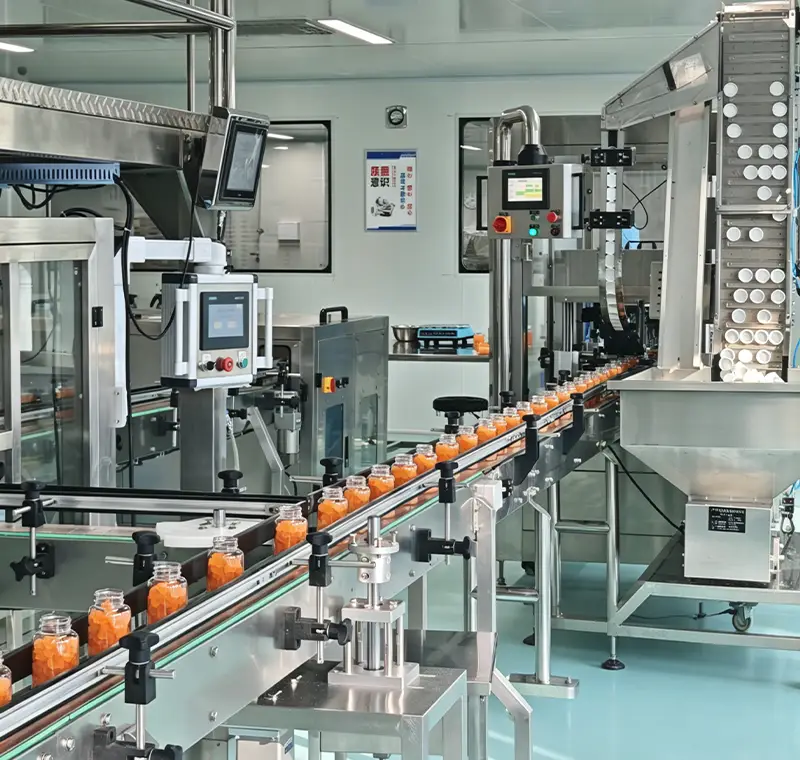
The flow of the cooked gummy mass must be within a suitable window for temperature, flowability and gel build. Too runny and the deposit will spread and leave tails, too thick and accuracy of fill and surface finish suffers. Active ingredients, colors, acids and flavors can all alter the behave of the masses. For example, a nutraceutical gummy may not be just like a typical confectionery recipe. The high powder load may increase viscosity or cause a suspension of particles to form, which might mean adding certain ingredients later in the sequence to take advantage of a lower viscosity before processing. The deposit settings, nozzle selection, pump and line speed all influence piece weight, which production staff continually compare against the target to fine tune the processing conditions, which is why “the same mold” may not give the exact same run for two different formulas.
Curing is part of the formula
Filled trays usually transfer into a room where their time, temperature and humidity controls setting and moisture adjustment. Curing is not an idle practice – it is intended to determine final bite and appearance, as well as release and packing efficiencies. Piece size, gelling system, solids, acids and active load may all require adjustments to that profile. Removing trays prematurely results in an unmanageable chew. Over–curing leads to a toothier bite or reduced yields. The specification should be based on the characteristics of the finished product rather than hours alone. Texture, water activity and moisture (where appropriate) generate release values of greater relevance than a clock, and the bench-top trial can be scaled to confirm if the laboratory expectation, stack loads and room loads are similar.
Starch conditioning needs its own controls
Recovered starch has moisture and heat in it. It must be screen-able with product, and conditioned before it can be reused. Prevention of foreign matter and allergens must be appropriate to the products that are being made on the machine. The factory must have a system in place for checking the condition of the starch. The system must describe how it’s cleaned, how product change-overs are managed, how damaged or otherwise undesirable starch is taken out. No three systems are exactly the same, as it depends on the equipment, the range of products and the food-safety plan. You don’t have to run the mogul, but you should understand that moulding relies on a reasonably well-built supporting system. Ask about moisture, screening, circulation and house-keeping during the audit or technical meeting.
Demoulding and finishing change the final appearance
The trays are emptied and the gummies are released from the starch, which is cleaned away by equipment. The quality of finished gummies off the last cleaning stage are often still quite matte. Finishing with oil adds gloss and minimizes the sticking. Sugar or sour sanding finishes the surface differently and might need an additional step, such as steam, to make it adhere. The finish also impacts more than the look: flavor release, taste balance, ease of handling and label ingredient perceptions are affected. Piece weight changes as well; finish needs to be defined clearly if the target weight includes it. Design samples should be checked using the same final finishing process intended for manufacturing; an uncoated lab sample is not necessarily a good appearance standard for an oiled or sanded finished product.
Where a starch mogul adds flexibility
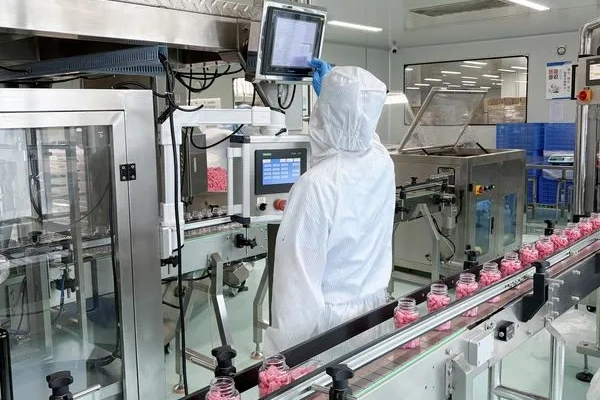
The full complementary of shapes that could be made is staggering and starch is a natural fit for many gummy and jelly ideas. Various gelling systems. Shapes. Colours. Some filled or layered ideas for various line set-ups. For a private label brand, the value-add isn’t “never ending options”. It’s having a streamlined path from existing tooling and formula to consistent tray-based production. The quote should therefore identify ranges of standard shapes vs. custom tooling. Routine mono deposits vs. more complex formats. Pilot runs vs. production runs.
A sample brief for starch-moulded gummies
Good buyer brief will include: destination market, product category; gelling preference and dietary needs; active ingredients and level per serving; number of gummies per serving and target piece weight; shape reference (not just photo) and dimensions; color/flavor direction; finish (oil, sugar, sour sanding or other); bottle/pouch number; packaging and shelf-life target; quantity/year and the timing of launch. The factory can determine if shape, formula and serving work together. If the proposed gummy is too small for the active load, tooling should not be approved until the formula concern is settled.
Questions to ask during sample approval
Check from the reverse side of one perfect example. Take a few samples of gummies from the load for weight, thickness, cavity detail, surface blemishes, tails, bubbles and coat consistency. Note shape survival during bottle filling and transport. Keep the approved shape drawing, printing-board reference and sealed product sample together. A photo alone will not reveal thickness, texture and weight.