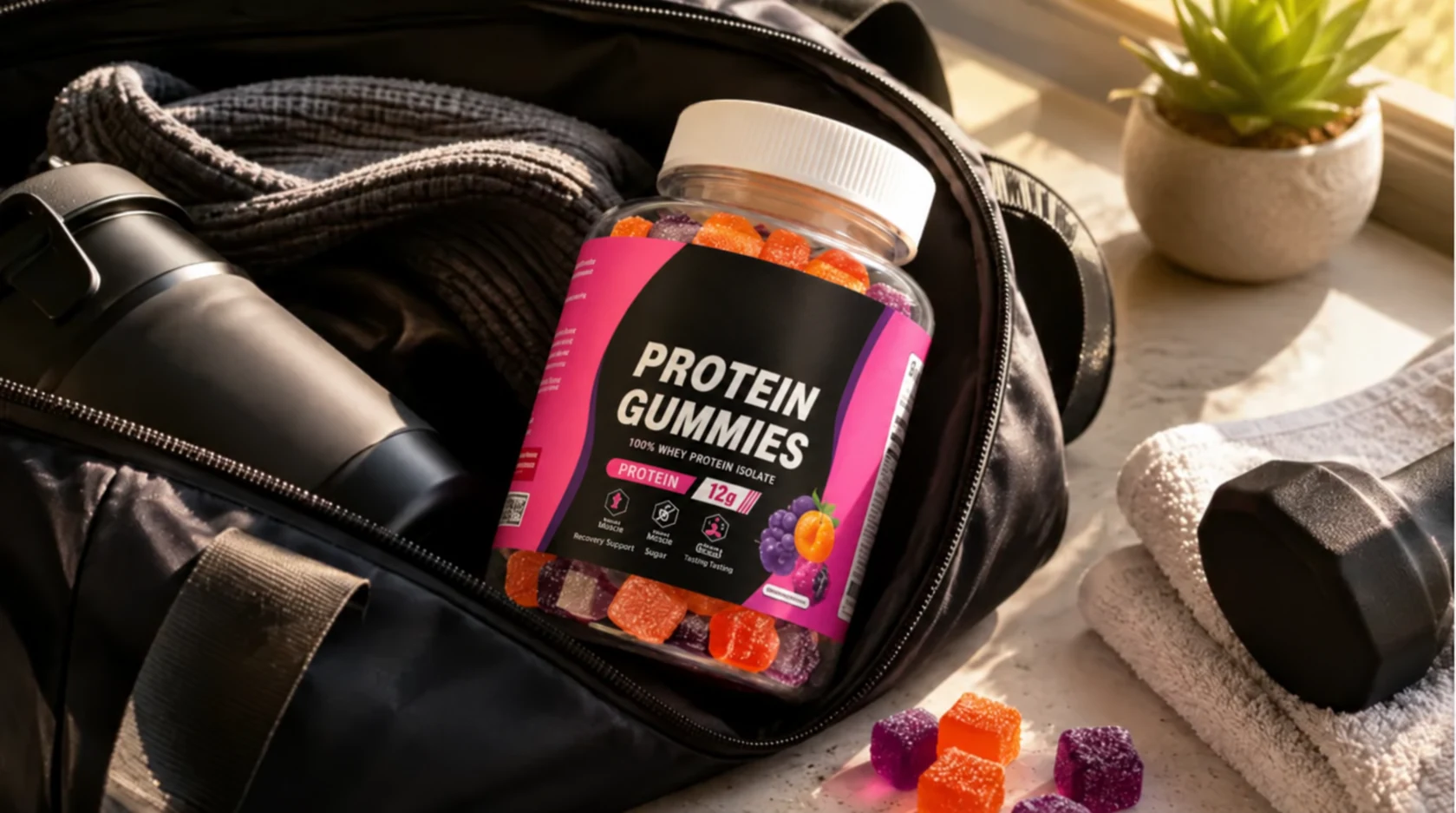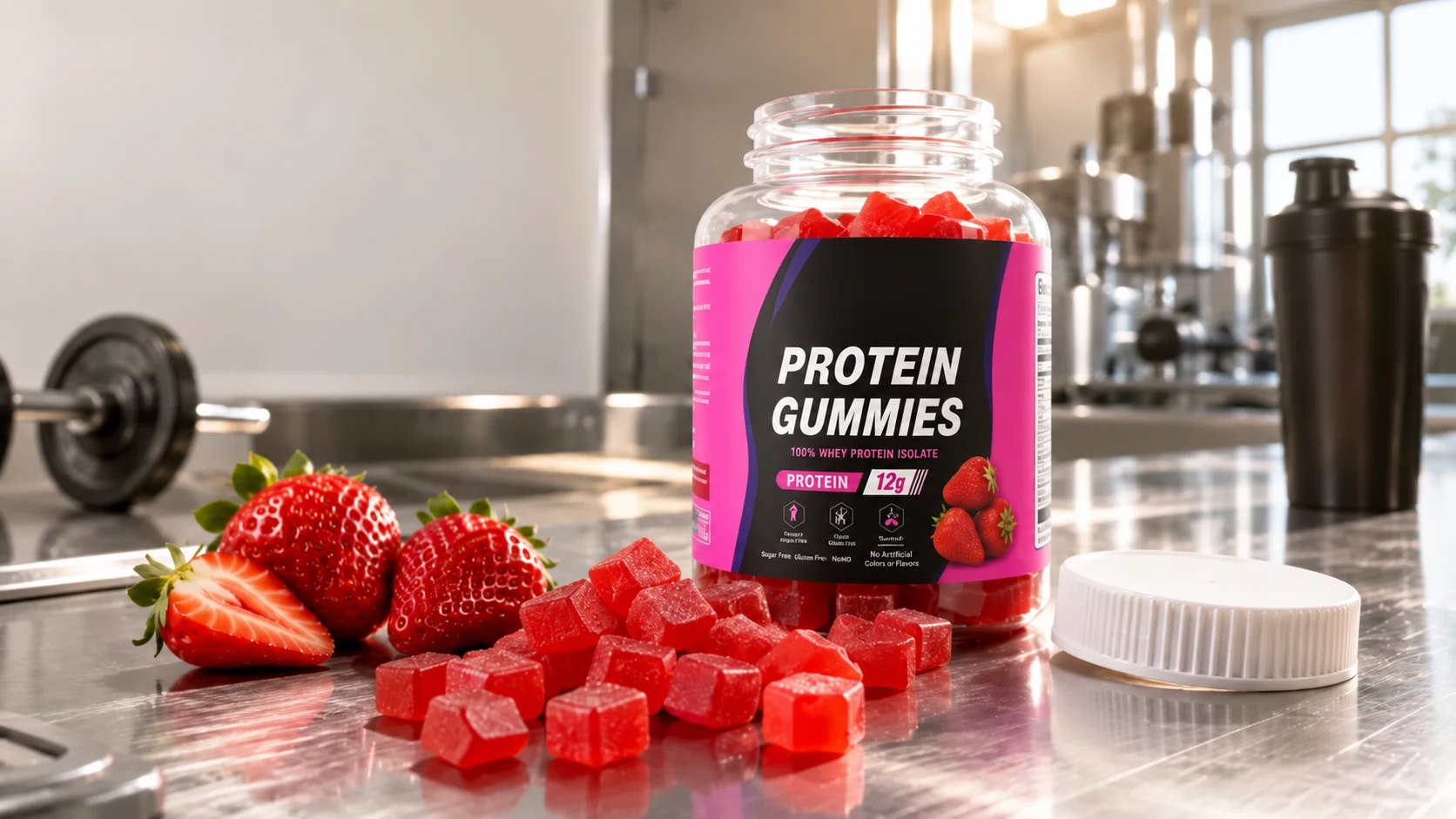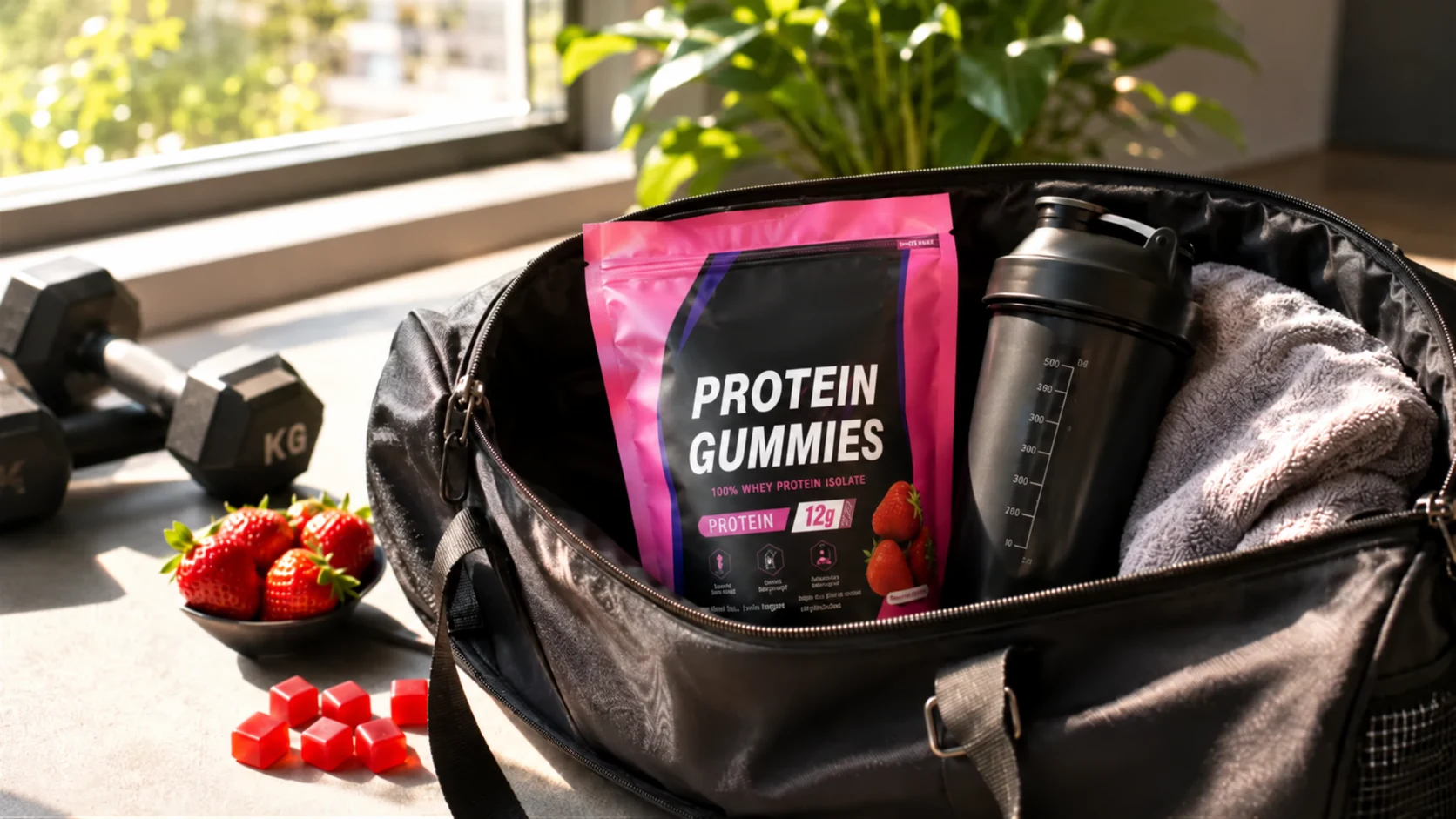




Protein gummies live between two worlds. They take the convenience of shape and chew familiar from a gummy, while consumers compare them with powders, bars and ready-to-drink drinks. This comparison gets confusing when the proposed serving is not clear. A practical brief then starts with the protein source and grams per complete serving, and spirals outward through count of pieces, flavor of strawberries, texture, water management and packaging. Decide what it is you want to be able to sell What can this protein gummy do? This ranges from a convenience snack mini-me to a dedicated source of complete protein or part of a broader active-nutrition range. Such options are different briefings. Write down your target consumer, target occasion, target serving size and the precise role of each format in the range. Do not rely on factory to push protein to a technically workable level before settling on the end-use experience you want the consumer to have. A workable formula may be commercially inconvenient if the serving requires too many pieces or the texture begins to lose the gummy feel. Product development and packaging reference Find your protein source on a second row Request exact protein source, country of origin, allergen status, typical composition and relevant processing procedures. Different sources behave differently in flavor, color and texture and a name on the label does not describe those differences. Review supplier documentation and the work-in-progress specification as the label description. If more than one source will be used in the product, identify the role of each and support the complete product label with the finished-sample specification rather than a generic term like ‘protein complex.’ Product development and packaging reference Complete your serving math before asking for artwork Start with desired complete-protein weight per serving, then estimate number of gummies required at proposed piece weight and resulting bottles per serving. Many times the concept is made plausible-or needs to be compromised-by this calculation. A low count may necessitate a firmer, denser gummy. A larger serving size might be more comfortable for manufacturing but a less portable packet. Put protein per serving, count per serving, servings per container and net weight on the same worksheet so the label and cost model are consistent. Product development and packaging reference Only ask for Strawberries as Flavor Design Strawberries are a flavor family rather than a single flavor. Though subjective, the aroma, acidity, sweetness, ‘strawberry’ notes and base gummy can differ wildly in the final sample. Choose samples that are scored blind by our sensory team in a side-by side comparison, changing only one or two variable at a time. Record each sample and keep blind codes. This enables remote teams to compare notes on the same samples, without depending on photographs or ingrained memories. Product development and packaging reference Watch and retain moisture A gummy can change during storage in response to water absorption or migration. Even a very high-quality sample might become firmer, softer or stickier with time in storage. Clarify planned shelf life studies, packaging barrier effectiveness and shipping conditions with your production team before approving a formula. If formula can accommodate travel in hot, wet and tropical climates, update the brief accordingly. Clarify the point where a sample can look pristine on Day 1 and still be “bad.” Ask for more than one sample to be used for pilot manufacturing Before approving that a complete development sample is ready to pilot production, confirm that the new formula deposits well and is consistent in piece weight. Confirm how the pieces fall from the mould, how they respond to coating and drying conditions and how the packs fill and close. Pilot batches on lab or semi-works equipment should be available for side-by-side comparison with new formula. If the pilot run was adjusted, note the change before artwork approval. The company writer might see the product as some sort of marketing wish list until it hits the pilot run, which should provide answers to manufacturing questions. Select your pack after the gummy has been understood Whatever the raw form, the finished product must be packaged in a way that makes the pack composition clear to customers, with the optimized price point in view. A bottle, pouch or stick pack will impose a different count range, barrier needs, label space and case count than a blob of gummies; and the finished sample should be tested on the pack intended. The market’s message about strawberry protein gummies might be on the label front panel, but the rest of the pack must still provide the text for serving size, protein content, ingredients, allergens, directions, storage and the individual-market requirements.