



Put three orange gummies on the table. A tastes like citrus until the zinc shows up at the back of the mouth. B has no sharp finish, but it leaves a film on the fingers. C is the one everybody reaches for; a week later, the retained pieces have stiffened.
At that point the question is no longer “Which flavor won?” It is “What exactly did we test?”
The sugar-free part and the zinc part cannot be handled on separate approval sheets. Sweetness, solids, chew, and the mineral finish meet in one small piece. Our OEM zinc gummies product page shows what can be customized.
The answer for a particular brand still has to come from its own samples and specifications.
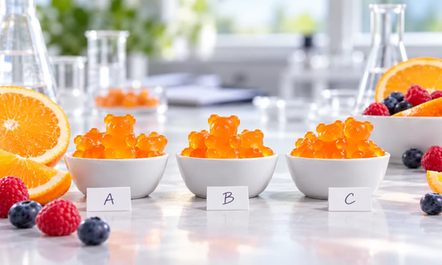
Illustrative: sugar-free zinc gummy samples and coded sensory cups
Start with the finished serving, not a sweetener list
We often see an ingredient named before the serving has been settled. “Zinc citrate, orange flavor” looks like a brief until someone asks what amount the customer is supposed to take. The U.S.
Supplement Facts amount refers to elemental zinc, not the weight of its compound; the NIH Office of Dietary Supplements fact sheet explains the distinction. So the starting numbers are elemental zinc per daily serving and the largest number of pieces the brand wants on its label.
The particular zinc source can then be discussed against those limits.
That piece count changes the shelf offer. Sixty gummies last thirty days at two per day; they last twenty at three. Buyers compare bottles, but their customers live with the daily serving. If three gummies feel like a chore, a cheaper-looking bottle may be the wrong commercial answer.
This is the moment to discuss piece size and pack count, while the artwork is still just an idea.
The formulation sheet, the pilot sample, and the eventual release result deserve separate columns. They might agree. They might not. Until finished pieces have been checked against a specification, the elegant number on the formulation sheet is only a target.
What changes when sugar and zinc are handled together?
Take sugar out of an established gummy and the missing sweetness is obvious. The missing solids are easier to overlook. They mattered while the mass was cooked and deposited, and they matter again when the dried pieces are pulled from a bottle.
A replacement system might bring a cooling sensation; another might leave sweetness hanging around after the fruit note has gone. A label panel will name the ingredients, but it will not tell a buyer whether the gummy clings to a neighboring piece on a warm day.
Zinc can make that long finish awkward. A convincing berry aroma at first bite may have disappeared before the mineral note arrives. The zinc gummy flavor guide deals with masking generally; here the unresolved question is what happens after the sugar base changes.
We would taste the zinc in the proposed sweetener and gel matrix, not approve the fruit flavor in a conventional base and hope it carries over.
Imagine A and B use the same zinc target. A wins the first five seconds; B wins the last thirty. For an adult daily supplement, B may be the more promising lead even though nobody called it “the sweetest.” That is a decision a brand can make deliberately.
The team can then work on B’s opening without throwing away its cleaner finish.
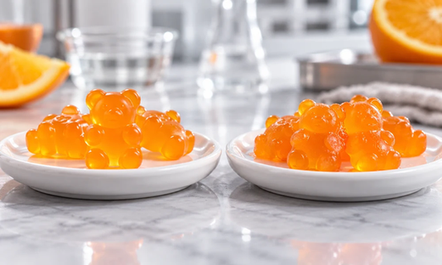
Illustrative: comparison of sugar-free zinc gummy texture and surface finish
Use a small test matrix to expose the real trade-offs
“Send us your best flavor” tends to produce a box of pleasant but incomparable samples. One is softer, one is more acidic, and one contains a different sweetener. Nobody can tell why the winner won. For the first round, we would freeze the zinc target, piece weight, gel base, and serving count.
Only one choice moves. When the problem is a lingering sweet note, keep the zinc and fruit profile steady while the bulk-and-sweetness system changes. If the chew is the problem, leave the flavor alone for a round.
|
Sample question |
Keep fixed for this round |
What reviewers should note |
|---|---|---|
|
A cool sweetener seems to magnify the finish |
Zinc target, flavor, piece size |
Does the last note taste mineral, sweet, or both? |
|
More acid makes the fruit brighter |
Sweetener, zinc source, gel |
Has the chew also become harsher? |
|
A single piece is pleasant |
Zinc target, piece count |
Is the third piece still pleasant? |
I would put the coded cups beside the proposed daily serving, not beside a single gummy on a display tray. Reviewers taste at their usual pace and jot down what happens at first bite, halfway through, after swallowing, and a minute later. “Metallic after piece two” is useful.
“C is nice” sends the formulator back to guesswork.
When the next box arrives, put it next to the old one. Otherwise the team may celebrate a cleaner finish while forgetting that the old gummy separated more easily in the cup. The tasting card should carry the market and ingredient exclusions as well.
A clever sample has little value if it cannot be used in the proposed product.
Approve aged, packed samples rather than fresh samples alone
The piece in a sampling cup has had an easy life. A retail gummy has had a trip and time on the shelf. We would keep the lead formula in its intended pack and revisit appearance, sticking, chew, flavor, and zinc content against an agreed specification.
Our gummy testing and stability guide covers the wider quality framework. For this project, the review dates and measurements belong to the actual formula, not to a borrowed calendar.
Now put the same gummy in two packs. The bottle has its own closure and headspace; the pouch has a different seal and gets squeezed during handling. A gummy that can be shaken loose from a bottle might be hard to remove from a narrow pouch.
If the brand changes format after the tasting, the earlier storage evidence needs another look. The day-one score cannot supply a shelf-life number.
There is also a point at which the packaging discussion is a distraction. If the gummies already feel tacky before filling, upgrading the pouch laminate may hide the problem for a while.
I would rather see a defined condition for pieces entering the pack and a clear hold decision when a batch misses it.
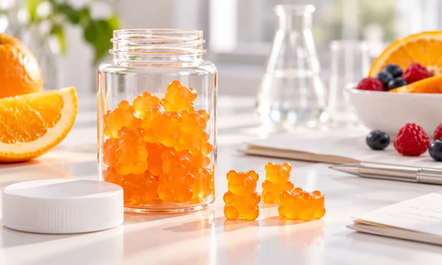
Illustrative: bottled sugar-free zinc gummy sample for storage review
Check the sugar-free claim in the destination market
The pack may be sold on both sides of the Atlantic, but one sugar calculation does not settle both labels. FDA’s dietary supplement labeling guide describes the U.S. “sugar free” rule: less than 0.5 g of sugars per reference amount and labeled serving, with calorie wording to check where applicable.
The European Commission’s nutrition-claims list uses no more than 0.5 g per 100 g or 100 ml for “sugars-free.” A pack designer needs to know which market is on the brief before a claim goes on the front panel.
Neither threshold can be checked from a concept recipe alone. The reviewer needs finished-product data and the proposed words. “No added sugar” is another question; so is “reduced sugar.” Zinc claims need their own review, and a mineral ingredient does not turn an untested gummy into a disease or absorption product.
Better to discover a claim problem while sample codes are still on cups than after the first print run.
What to send a manufacturer for a useful first sample?
The most useful first email is fairly plain. It says where the gummies will be sold, who will take them, the proposed zinc serving, and whether “sugar free” must appear on the front. It gives the piece-count limit and notes whether a soft chew or a firm bite is acceptable.
It lists ingredient exclusions, bottle or pouch preference, pack count, and likely first-order size. If flavor is open, say so. An honest blank is better than a guess that quietly becomes a specification.
Our custom formulation service can take that email into a first sampling discussion. We would show which variable each round is meant to answer. Once a lead sample emerges, the written approval should cover its formula, finished-product specification, package, and checks.
Otherwise the next person in the project may remember only that “the orange one” was approved.
To start, contact Red Kangaroo with those project details. A photograph of a gummy can convey the visual direction. The serving target and market tell us what needs to be built.