



Imagine the first supplier email. It has a price, a picture of pink gummies, and a certificate with “98%” in a large box. The number gets copied into the product brief before anyone notices that the certificate’s lot is not the one the supplier plans to ship. Stop there.
The quoted price can stay on the screen, but the ingredient is not ready for approval. The question is what the supplier measured, on which material, and whether that material can make the gummy the brand intends to sell.
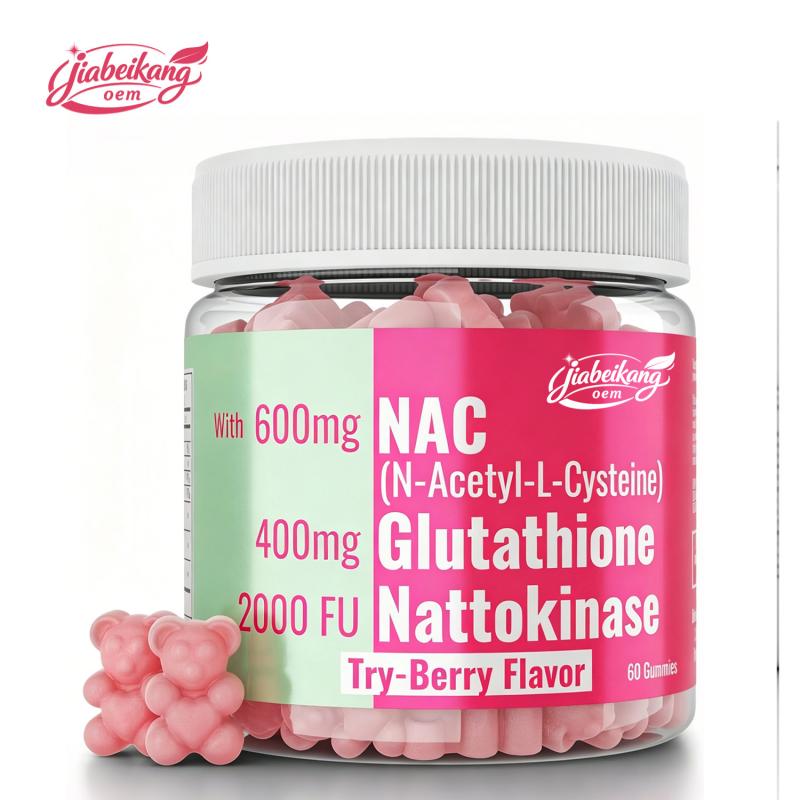
Our glutathione gummies product page gives a brand a sense of the format. It cannot choose the raw-material specification for a new SKU. That happens at a desk with the actual certificate, the proposed label, and a sample lot number in view.
Ingredient Form: Confirm What the Purity Figure Refers To
On the purchase line, write the form in full. GSH refers to reduced glutathione; GSSG is the oxidized disulfide. NIH PubChem maintains separate records for glutathione and its disulfide.
A shorthand “glutathione” in the buyer’s spreadsheet is enough to start a conversation, but too loose for a formula that will carry an ingredient name on its label.
Put two offers on the desk. Supplier A names the reduced form and gives a lot result. Supplier B sends a cheaper quote with “98%” at the top, but leaves the method field blank. I would leave B’s cost-per-serving cell empty for the moment.
Filling it in would imply that its percentage is comparable with A’s. A short request for the missing method and lot record is enough to move this conversation forward.
Suppose the sample sachet carries lot 24A and the purchase order says 24B. Put that difference in the change log with the supplier and site, even if the trade name is unchanged. Particle and moisture specifications may matter in a gummy mass.
The tasting approval belongs to the sampled material; it should travel with its lot record, not with a generic product name.
Purity and Identity: Check the Full COA
Read the small print around “98%.” Under “method,” a supplier might report a quantitative content assay, or it might report a chromatographic area percentage. Those cannot be silently put in one comparison column. When assessing glutathione purity, record the assay basis, units, limits, test date, and offered lot beside the result.
Any blank remains a question for the supplier. No decimal point can repair a missing method.
On the U.S. side, the FDA dietary supplement CGMP guide calls for component identity and specifications relevant to finished-product purity, strength, composition, and contamination. In a supplier packet, I would look for those questions in separate places. The purity result is only one entry on the page.
It has no special power to release a lot if the identity or contaminant work is absent.
Our quality and compliance approach is relevant once a particular lot is on the table. The purchase specification says what was ordered; the supplier COA says what was tested; the receiving record says what arrived. If those three lot numbers disagree, circle the difference and stop the handoff.
A tidy certificate for the wrong bag is no comfort.

Raw-Material COA: Separate Powder Data from Gummy Results
The powder arrives with a COA. The finished gummy leaves the line with acids, flavor, sweetener, gel, and a packaging history that the powder never had. A lab method written for clean powder may struggle when it meets that mixture.
The practical question is whether a finished serving can be tested in a way that the brand and lab both understand. In glutathione gummies manufacturing, keep the powder certificate in the file, but do not use its result as the finished-gummy result.
Set the proposed serving amount, then send the actual gummy to the lab. If the reading is low, ask a blunt question before changing the recipe: did the process reduce measurable content, or is recovery from this sticky matrix poor? That distinction changes the next experiment.
Add more powder too soon and the team may pay for an assay problem that was never a formula problem.
Our gummy testing and stability guide deals with the broader sequence. In this notebook, the useful line is narrower: lot 24A, ingredient input, piece weight, daily piece count, analytical method, and the pack that holds the sample. If a later trial changes the bottle or the method, start a new line.
The original release value stays with the original trial.
In a coded tasting, A wins the room. B is less exciting, yet the lab can measure it consistently. I would keep both on the bench for one more round. The formulator can work on B’s flavor while the analyst checks why A’s result jumps between repeats.
Otherwise a fast sensory vote can send an analytically unclear product straight to artwork.
Approval Evidence: Record Gaps Before Release
One page is enough for the first decision. Leave a cell empty when the document has not arrived. The table helps people see the gap; it does not set universal acceptance limits.
| What has to be settled? | Place the evidence here | If the box stays empty |
| Exact ingredient form | Named specification and lot record | Hold raw-material approval |
| Meaning of the purity figure | Method, basis, limits and lot result | Do not compare supplier percentages |
| Identity and contaminants | Applicable tests and receiving decision | Do not release the component by assay alone |
| Finished serving amount | Suitable gummy method and pilot result | Keep the label amount provisional |
| Pack and storage | Actual retail-pack study plan | Do not borrow a date from fresh samples |
At Red Kangaroo, I would put this sheet between the quote and the artwork proof. The buyer can point to the supplier-method cell. The label reviewer can point to the finished-serving cell. That saves a long email chain in which everyone thinks someone else approved the “98%” box.
Market Claims: Connect Purity Evidence to Label Review
The draft front panel may say “beauty” before the ingredient has been chosen. Move that claim into a separate review column. The COA can speak to the raw-material lot; it cannot show what happens to a person’s skin or how well a finished gummy is absorbed.
A U.S. pack and an EU pack also face different ingredient and claim decisions. Write the destination country above the headline so the copy review has a real market to answer for.
For an EU launch, start the status review with the exact form and intended use. The European Commission’s Novel Food status catalogue is an orientation tool, and the Commission cautions that it is neither binding nor exhaustive. A derivative carrying “glutathione” in its name needs its own check.
Ask the reviewer to record the destination country and the conclusion, not just paste a catalogue screenshot into the folder.
For U.S. copy, give the reviewer the exact sentence the sales team wants to print. A promise to treat disease is out of place on a dietary supplement. Other proposed claims need their own substantiation.
If a phrase outruns the evidence, cross it out on the artwork proof before design polishes it into something expensive to revise.
Manufacturer Brief: Turn Purity Requirements into Tests
The first email could fit on one screen. “U.S. launch; reduced L-glutathione; two gummies per proposed serving; pouch preferred; first order size under discussion.” Add the supplier’s complete documents, any ingredient exclusions, and the draft label language. If the COA is partial, say which page is missing.
A screenshot of “98%” leaves the formulator and analyst guessing.
Our custom formulation service can take that email into sampling. One round might settle whether the selected material can be processed and tasted in the chosen base. Another may be needed for finished-gummy assay or pack stability. These checks connect raw-material glutathione purity with the performance of the finished gummy.
We would name the question on each sample sheet so the team knows what approval it is being asked to give.
When the document gaps and trial question are clear, contact our manufacturing team with the current specification. We can discuss the material and gummy you intend to buy, rather than a purity number floating free of a lot.