



The concept deck shows three bright gummies beside a small bottle. The product brief says “creatine” and little else. At the first sample meeting, someone asks whether those three pieces represent a day’s serving. Nobody can answer. I would stop the meeting there. The tray might be a one-day supply or only half of it; either reading changes the proposed bottle and its retail economics. I would ask the brand to put two numbers on the brief before tasting continues: the daily creatine target and the most pieces it expects a customer to chew. The mold can wait.
Gummies can carry creatine. That does not mean any appealing tray contains the amount on the proposed label. Read the NIH Office of Dietary Supplements fact sheet for the research context. Then close that tab and look at the proposed gummy’s batch record and assay. If those records are absent, no one knows whether the photographed sample supports the intended daily serving. The creatine gummy product page helps the team picture a format. It cannot validate an unmade formulation.
First decide what a day’s serving can look like
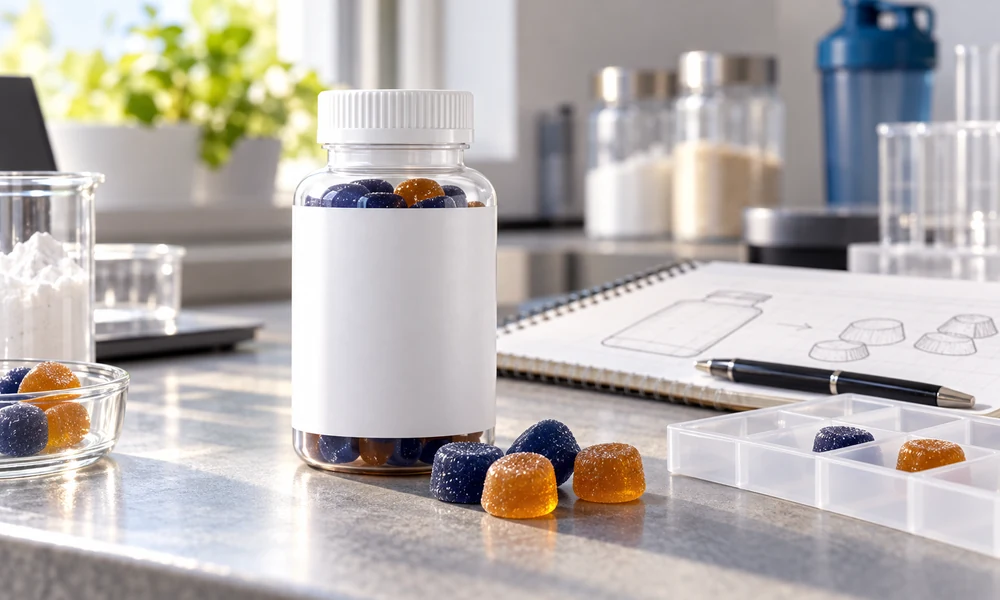
Ask a commuter to hold six gummies in one hand. Ask a gym customer to imagine finishing them after a session. Their responses may tell the brand more than another round of bottle renders. I would test the full portion with actual-size mock pieces, record where the routine starts to feel excessive, and give the formulator that ceiling. If the proposed target misses it badly, flavor work is premature.
For arithmetic only, imagine a proposed 3 g daily creatine target. This is not a dose recommendation and says nothing about what any particular gummy can hold. Two pieces would require a target of 1.5 g each; three would require 1 g each. Creatine is not the entire piece. The gelling base, water, flavor and sweetener must fit as well. The piece weight and texture may change while the active target stays fixed.
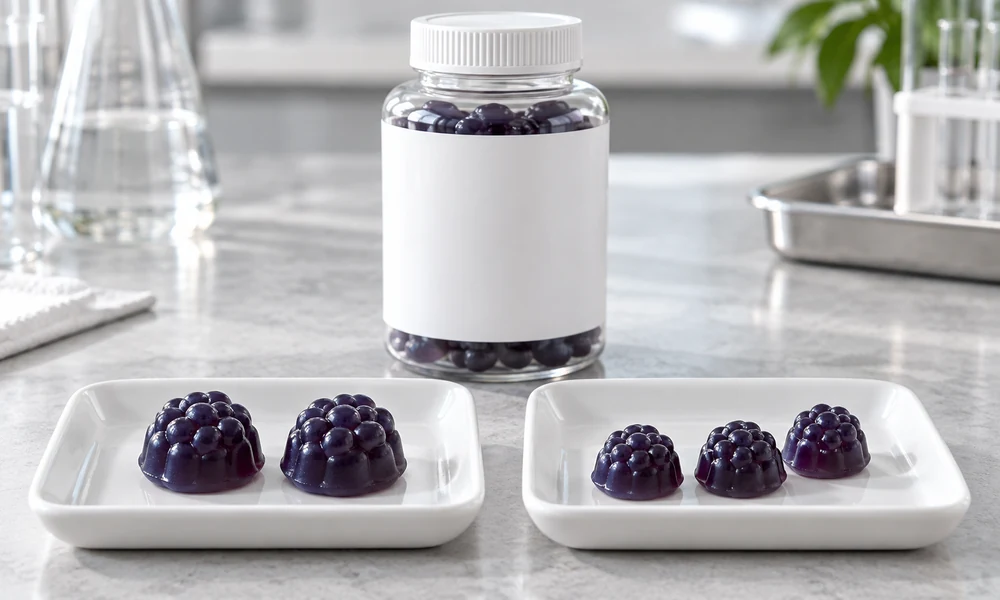
At the bench, label each trial with its recipe code, creatine form, target per piece and actual piece weight. Put the entire proposed serving on a plate. One attractive gummy tells very little about the weight and chewing time of three. The creatine gummy category can help a team discuss presentation; only the coded trial and its measurements can settle this project’s serving.
Count the bottle in days before pricing it. Sixty pieces yield thirty days at two per day, twenty days at three, and only ten days at six. A shopper sees “60 count” first; the team should see the number of repeat purchases implied by the serving. Put the pack price beside each scenario and calculate the price per day. If that daily figure looks awkward against the product’s intended position, the discussion belongs in development, not after the labels arrive.
This sheet also exposes conflicting instructions early. Sales may have promised a thirty-day bottle while product development is sampling a three-piece serving in a 60-count pack. The numbers cannot both stand. Change the count, change the proposed serving, or change the promise before printing begins. Do not leave the discrepancy for the label reviewer to discover at the end of development.
Here is a useful gate sheet for the sample meeting. Leave a cell open until the evidence exists; a target is not a test result.
| Gate | Decision the brand owns | Record needed to move ahead |
| Serving | Target per day and maximum pieces | Trial code, proposed piece weight and measured content |
| Eating | Full serving, not one piece | Notes on chew, grit, flavor and finish for every piece |
| Pack | Count, container and price ceiling | Days of supply and cost per day |
| Production | Approved recipe and variation limits | Agreed finished-product criteria and checking plan |
Taste the proposed routine, then write down the fault
The tasting sheet should have three numbered boxes if the proposed direction says three gummies. Reviewers eat the complete portion, with water nearby, and fill each box as they go. Notes such as “acidic at first bite” in box one and “powder on the tongue” in box three point the bench toward different adjustments. A single seven-out-of-ten score would hide the progression. The timing of a complaint belongs in the record alongside the complaint itself.
Texture deserves the same specificity. A larger piece may reduce the count but take too long to chew. Smaller pieces may be pleasant alone and tedious as a full serving. Ask the tasting group to handle the proposed pack as well as the gummies. This shows whether the size, count and container feel like one product or three compromises glued together.
Keep the coded sheet from the first tasting. A week later, people may remember it as “too sour” but forget that the pieces were also small and easy to chew. If the next tray fixes acidity by increasing piece weight, put both trays back on the table. Ask reviewers to write which version they would actually take every day. That is a more useful answer than a vote on flavor alone.
Check the packed sample before calling the formula finished
Take a small set of the coded pieces off the bench and put them in the proposed sales pack. The shelf-life discussion starts with that pack, a storage schedule and specific review dates. Log each opening: assay result, pieces stuck together, firmness, color, flavor and anything unusual about the closure. Imagine a bottle whose gummies still look glossy but fail the agreed content range. Now imagine a passing assay in a pouch full of stuck pieces. Neither result supports the launch as written.
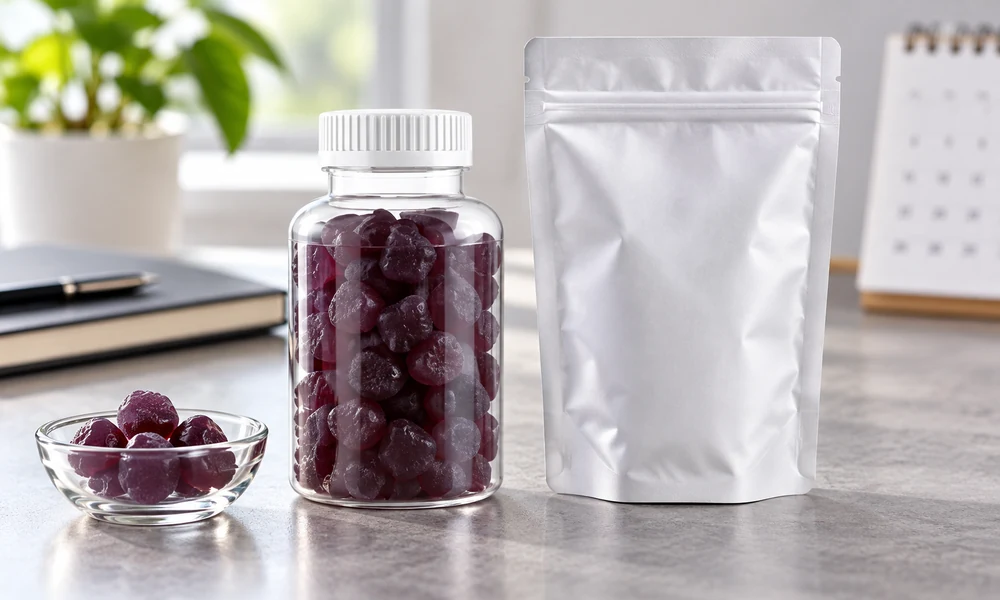
The sales team may later prefer a pouch to the bottle in the trial. That is a new question for quality, especially if the closure and moisture exposure differ. Put the packaging change on the sample record. Next to it, write the checks quality wants repeated. Otherwise the label may inherit a shelf-life figure established with a container the customer will never receive.
In the United States, dietary-supplement manufacturers should work from 21 CFR Part 111; the FDA CGMP overview provides the entry point. For this project, ask the manufacturer to show the proposed specification sheet. Which content result would prevent release? Where is the production record? Who signs the review? Those answers matter more at a project meeting than a broad assurance that the factory follows the rules.
Keep a claim draft beside the sample record
Print the draft product page and lay it beside the sample record. Highlight every number in the copy. Can the finished-product test support it? Next highlight each benefit statement. What evidence and market-specific review support that language? The studies cited in a creative brief may use another delivery form or serving. Put that difference in front of the copywriter while there is still time to change a headline without scrapping printed packs.
Give each market its own copy file. For EU work, consult the European Commission’s nutrition and health claims framework; have U.S. wording reviewed on its own terms. On one proof sheet, place the ad, the product page and the label. A modest pack description can sit beside a much bolder digital headline; reviewing the three together makes that discrepancy visible.
The 3 g figure above illustrates division across pieces. It does not approve a claim or establish an audience. Attach the wording review to a sample code and market. When either changes, pull the copy back onto the review table.
Let the finished routine compete with other formats
The last concept review needs a tabletop comparison. Set out the actual daily gummy portion beside powder and capsules at the same proposed creatine amount. Place the corresponding packs behind them, with days of supply and estimated daily price written on cards. Try carrying each option in a work bag. A gummy’s portability counts for something, but the panel may still balk at six chews and a short-lived bottle. Make that decision with objects in front of the team.
End the meeting with a decision that can be acted on. If it is “proceed,” attach the chosen sample code and the unfinished tests. If it is “revise,” name the one or two variables for the next trial. A pause is valid too: the daily routine may be too expensive or cumbersome at the intended amount. Such a pause costs less than defending an unsuitable launch later.
The team can send its brief through Red Kangaroo’s contact page: creatine form, daily amount, maximum pieces, target buyer, sales market, flavor, pack and first-order estimate. With those numbers, the custom formulation team can scope a coded trial. A bottle image by itself tells the bench very little.