


icon
Nuestro compromiso

Tanto si eres una marca que busca soluciones OEM/ODM como si eres un consumidor que busca bienestar diario, te prometemos: Etiquetado de ingredientes honesto y transparente Productos de alta calidad, seguros y consistentes Atención al cliente atenta y eficiente

+86 18046223546

Fábrica: Edificio 3, 4 Gaoxin 2nd Rd, Huadong Town, Huadu, Guangzhou, 510000

OEM Creatine Gummies Supplement
OEM Creatine Gummies Functions
OEM Creatine Gummies Advantages

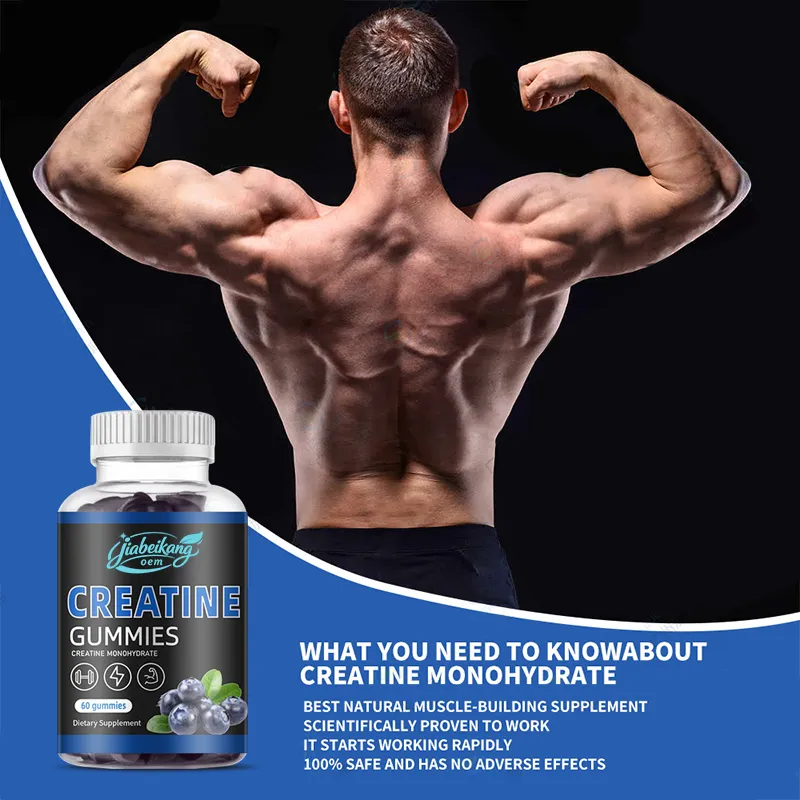
Gomitas de monohidrato de creatina para mejorar el rendimiento

Favorece el rendimiento en ejercicios de alta intensidad y la ingesta diaria de creatina.

Disponible para personalización OEM/ODM y de marca blanca, incluyendo opciones de fórmula, sabor, forma y empaque para el mercado objetivo.
  • Materiales de monohidrato de creatina de alta calidad
  • Tipo de creatina (extracto personalizado disponible)
  • Opciones de fórmulas personalizadas: ingredientes únicos o mezclas sinérgicas.
  • Opciones de sabor personalizadas: sabores de frutas naturales con tecnología de enmascaramiento del sabor.
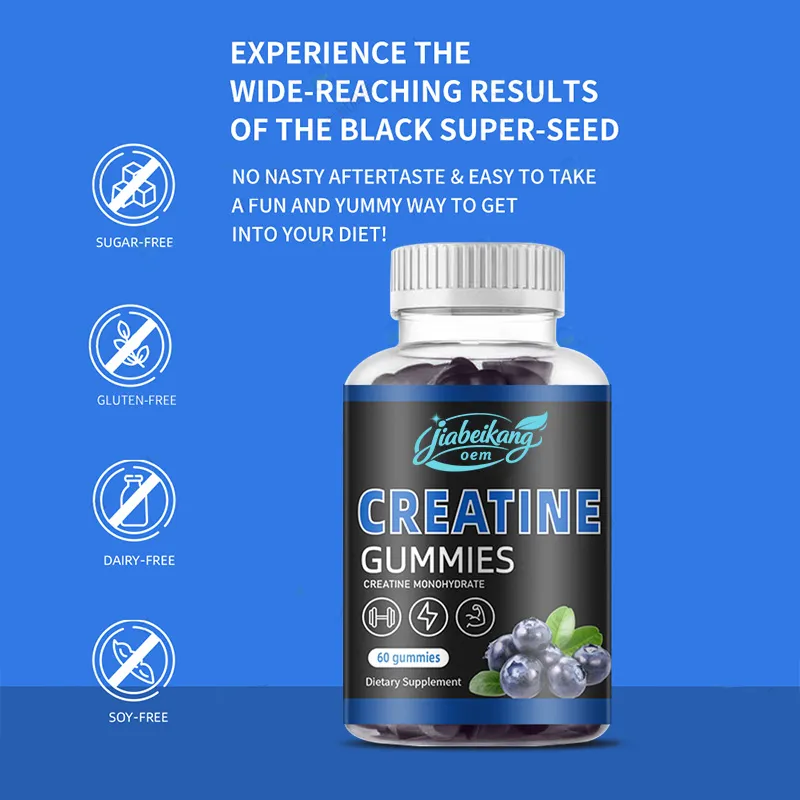
  • Contenido de azúcar personalizado – Fórmula sin azúcar disponible
  • Producto de marca blanca OEM: Su marca, su embalaje.
  • Servicio integral: ofrecemos soluciones completas para productos de gomitas.
  • Descripción de los detalles del producto

Especificaciones del producto

Artículo Detalles
Nombre del producto Gomitas de creatina OEM
Forma farmacéutica Gomitas
Contenido neto 60 gomitas
Uso sugerido 2 gomitas al día
Período de suministro 30 días
Usuarios objetivo adultos
Fuente de creatina Monohidrato / Personalizado
Duración 24 meses
Embalaje Costumbre
Declaraciones de la etiqueta Rendimiento deportivo / Aumento de fuerza / Recuperación tras el entrenamiento / Apoyo a la resistencia
Servicio de fabricación Fabricante de equipos originales (OEM) / Marca privada
Estándar de producción Instalación que cumple con las normas GMP.
Cantidad mínima de pedido 500 botellas
Plazo de entrega 15–25 días


Opciones de personalización

Ofrecemos servicios de personalización flexibles para proyectos de gomitas de creatina, que incluyen:

  • Tipo de creatina personalizada
  • Dosis personalizada
  • Ingredientes funcionales añadidos
  • Desarrollo del sabor natural
  • Formas de gominolas personalizadas
  • Opciones de embalaje
  • Diseño de marca y marca privada: etiquetas, logotipos y cajas personalizadas.
  • Fórmulas especiales: veganas, sin OMG, sin azúcar y sin colorantes artificiales.
  • Personalización del peso, la cantidad y el tamaño de la porción de las gomitas.
  • Cantidad mínima de pedido y flexibilidad en el cronograma de producción.
  • Transporte marítimo global y asistencia a la exportación


Escenarios de aplicación

Ideal para:

  • Atletas y culturistas: Buscan mejorar su rendimiento deportivo y aumentar su fuerza.
  • Para entusiastas del fitness: apoyo para el rendimiento en entrenamientos de alta intensidad.
  • Personas en fase de recuperación muscular: rehabilitación posterior a una lesión o cirugía.
  • Consumidores de alimentos de origen vegetal: a quienes no les gusta tragar cápsulas o polvos arenosos.
  • Profesionales ocupados: suplementación práctica para llevar.
  • Atletas de CrossFit y entrenamiento funcional: energía explosiva y gran potencia.

Ideal para marcas y canales comerciales. Perfecto para:

  • Marcas de nutrición deportiva
  • Marcas de fitness y gimnasios
  • Comercio electrónico y vendedores directos al consumidor
  • Minoristas y distribuidores
  • Mayoristas
  • Soporte para fabricación y certificación

Certificaciones y estándares

  • Buenas Prácticas de Fabricación (GMP)
  • HALAL
  • HACCP
  • Registro ante la FDA
  • Disponible con certificación Halal/Kosher.
  • Soporte para la documentación de exportación
  • Pruebas de laboratorio de terceros disponibles
  • Certificado de análisis proporcionado por lote

Cada lote puede ser analizado para detectar:

  • Potencia y pureza de la creatina
  • Metales pesados ​​(plomo, arsénico, mercurio, cadmio)
  • Microbiología
  • Contenido de humedad y cenizas
  • Estabilidad / Vida útil
  • cumplimiento de la seguridad del producto

Preguntas frecuentes

P: ¿Qué opciones de personalización están disponibles? R: Tipo de creatina Dosis Ingredientes adicionales Personalización del sabor Personalización del empaque P: ¿Cuánta creatina contiene cada gomita? R: Especificaciones estándar: Cada gomita contiene 1.25 g–2.5 g de creatina. Ingesta recomendada: 2 gomitas al día, para una ingesta diaria total de 2.5 g–5 g (consistente con las dosis recomendadas por estudios clínicos). La dosis se puede personalizar según los requisitos del cliente. P: ¿Cómo se deben tomar las gomitas de creatina? R: Tome 2 gomitas al día; se recomienda tomarlas con una comida o después de comer.

NUESTRO ÚLTIMO

Nuestras últimas noticias

How to Approve a Gummy Supplement Sample: Reference Sample, Feedback and Revision Control

21, noviembre

How to Approve a Gummy Supplement Sample: Reference Sample, Feedback and Revision Control

“Approved” is a surprisingly incomplete answer to a sample request. Approved for taste? Approved with the darker color, or subject to a color change? And which bag did the reviewer open? For a supplement brand, the useful outcome is a decision somebody else can follow. We recommend one identified sample, one comparison reference and one consolidated instruction from the brand. Keep the tasting decision distinct from the analytical and production requirements still outstanding. That way, an enthusiastic message from the sales team doesn’t become an instruction to manufacture a formula that quality hasn’t reviewed. Define the terms used in gummy sample approval A reference sample is an identified physical sample retained as the agreed comparator for specified sensory attributes. Record its formula revision, approval date and storage conditions. Sensory approval is the recorded acceptance of the reviewed taste, aroma, color, appearance and chew against agreed criteria. Analytical review assesses measured results against the applicable specifications. Production authorization is the documented permission from the responsible approver to manufacture a specified formula revision after the required reviews and conditions are closed. Decision or reference What it establishes Evidence and scope Reference sample The agreed physical comparator for sensory review. Sample ID, formula revision, storage history and attributes covered. Sensory approval Acceptance of the reviewed sensory attributes. Identified samples, review conditions and signed feedback. Analytical and manufacturing status are recorded separately. Analytical review Whether the tested attributes meet the applicable specifications. Traceable results, methods and acceptance criteria for the tests performed. Production authorization Permission to manufacture the specified revision under stated conditions. Authorized sign-off, approved revision and closure of required reviews. Start gummy sample approval with a traceable sample record Find the identifier on the bag and connect it to the manufacturer’s dispatch record. You need the formula revision, the variation supplied and enough history to know what you’re evaluating. Opening date belongs in that history too, especially if the sample will circulate around the office. A project number alone may be insufficient. If a courier box contains three flavors, each needs its own identity. When portions go to different reviewers, send that identity with them. “The pink sample” might work for a conversation on delivery day. Two deliveries later, it becomes ambiguous. For our custom formulation support, the sample reference is a useful starting point for a feedback discussion. Please include it in the review sheet as well as the email subject. It saves the formulator having to reconstruct which comment belongs to which version. If the identifier is missing, ask before issuing an approval. There’s no benefit in being decisive about a sample nobody can connect to a controlled formula. Give the reviewers a question they can answer An invitation to “try these and tell us what you think” will produce opinions. That may be all you need early in development. Later, when a production decision is approaching, a more focused question helps. Suppose the previous sample had an accepted fruit note but a lingering sweet finish. The next review could ask whether that finish has improved without losing the initial flavor. Reviewers then know what to compare. They can still flag a new problem, but the meeting has a purpose beyond collecting another set of preferences. Keep the question short enough to put at the top of the scorecard. Agree who will turn the responses into the brand’s instruction. A manufacturer receiving four conflicting emails cannot tell whether the last email overrides the first three. The invitation also needs to say what tasting won’t settle. Active content, microbiological requirements and shelf-life support need appropriate evidence. Our testing and stability guide covers those separate questions. A good eating experience can be accepted while those workstreams remain open. Compare the gummy sample with its reference under agreed conditions An opened sample left on a warm desk and a newly opened reference have different histories. If they feel different, the team may be judging storage as well as formulation. Record how samples were held and prepared, and use the agreed review conditions consistently. You don’t need to turn every internal tasting into a research study. You do need to describe it honestly. Coded bags can reduce the influence of a flavor name, for instance, but an informal office panel is still an informal panel. Keep the code key so that the preferred bag can be traced back to its actual version. A scorecard for this example could ask about the first fruit impression and what remains after chewing. Leave room for a short description beside any score. A reviewer writing “sweetness remains after the fruit fades” gives the formulator something a rating of 3 alone cannot explain. The coordinator can compare those descriptions when preparing the instruction. There is a limit to preference testing. A damaged seal, unusual odor or other possible quality concern goes to the responsible quality person before further tasting. The review group shouldn’t vote on whether a questionable unit is suitable to consume. Turn “too sweet” into an instruction Take this hypothetical pair of comments: one colleague says “too sweet”; another says “not enough fruit.” They might disagree. They might also be describing the same finish, where sweetness remains after the fruit note disappears. Ask when the unwanted characteristic appears before requesting a change. The feedback also needs to say what the next revision must preserve. Here, the opening fruit note and chew were accepted. Changing either would make the next review harder: the team would have to evaluate an improvement in the finish alongside a new characteristic it had not requested. An instruction could read: “Keep the initial fruit note and current chew. Please propose a way to reduce the lingering sweet finish.” That describes an outcome while leaving the technical choice with the people assessing the formula. For an elderberry project, the elderberry flavor and natural color guide can give the reviewers useful ingredient-specific context. Other formulas need their own assessment. A successful adjustment in one botanical gummy isn’t an instruction for every product in the range. There may be no formulation problem to solve yet. Suppose the sales team wants a sweeter profile and the product manager wants a tart one. Both samples could meet the technical brief. The brand has to choose its intended profile before commissioning a further revision; otherwise the next delivery merely repeats the same disagreement. Before sending, give the sheet to a colleague who missed the tasting. Can they identify the sample and explain the requested change? A question such as “which pink bag?” exposes an unfinished record immediately. Fix the sheet while the tasting team can still answer. The manufacturer will receive the written instruction without the conversation that made it seem obvious. Use a decision log that survives a forwarded email Here is a compact example for a hypothetical sample S03. It is a record format, not a specification or a claim about a completed project. Field Illustrative entry Version evaluated S03, formula R02; bag identity retained Comparison S02; opening and storage details recorded Accepted Initial fruit note and chew Revision requested Investigate lingering sweet finish Decision today Revise; no production authorization Instruction owner Named brand approver, with date Replaces Previous feedback on S03, identified by date               Keep earlier decisions, but mark which instruction supersedes them. Deleting the old record removes useful history; leaving every instruction apparently active creates a different problem. A reader should be able to find today’s decision without reading the entire correspondence. Disagreement deserves a note when it affects the outcome. A packaging reviewer asking for a smaller gummy may be concerned about the intended count fitting the container. That is a different question from whether the chew is pleasant. Give the technical team the reason, rather than merging both comments into an unexplained size change. Retain the reference sample and define the gummy sample approval scope Agree which accepted sample will be held, by whom and under what conditions. If the brand and manufacturer each retain a portion, connect both to the same identity and approval. Note how much remains. Repeated tasting can consume the reference just when another team needs it. The reference will age. When it stops being a fair sensory comparator, a replacement needs an agreed route. Keep the written acceptance criteria and the earlier approval through that transition. Replacing an old bag shouldn’t quietly redefine the product. Our quality and compliance approach is a useful basis for discussing how reference samples and specifications fit together. The physical sample helps with an agreed sensory comparison; measurable product requirements still need their own controlled criteria and evidence. The approval can be quite short once the supporting sheet is complete. For example: “S03 / R02 sensory attributes accepted against the recorded reference. Analytical review and pilot decision remain pending.” That illustrative wording gives scheduling a defined status. The real decision still needs the authorized signature, date and any other outstanding conditions. Keep it with the sheet rather than in a separate message that might never reach production. When sending the next review to Red Kangaroo, include the reference IDs and the combined feedback sheet. Tell us what should stay, what needs changing and who will authorize the result. That is enough to start a focused revision discussion without asking the formulator to interpret a collection of competing preferences.

When an Ingredient Supplier Changes: How to Requalify an Approved Gummy Formula

20, noviembre

When an Ingredient Supplier Changes: How to Requalify an Approved Gummy Formula

The replacement quotation has the right ingredient name. The price works, and purchasing can get it before the next batch. There is still a technical question to settle: can this particular material be used in the approved gummy formula? We would put that question into a change request before placing the material into approved stock. Requalification starts with the differences between the current and proposed sources. It ends with a decision that production can act on, including any conditions and the first permitted use. A certificate attached to the quotation is evidence to review along the way. Define the ingredient supplier change for the gummy formula Consider a hypothetical project with an approved powder bought through distributor A. Purchasing now proposes distributor B. Does B supply the same material from the same manufacturer and site, or a different manufacturer’s powder? The answer changes the assessment. A new invoice address does not necessarily mean a new ingredient, and a familiar trade name does not establish an unchanged source. Draw the two routes on the request. Include the material identifiers and the source information available for technical review. Where confidential information needs a restricted review arrangement, resolve that access question explicitly. Leaving the origin unknown is an unresolved question, even if the proposed delivery date is convenient. For a discussion through our custom formulation support, send the approved specification with the proposed specification. Identify the sample and certificate belonging to each. The reason for the change belongs there too: a discontinued source may leave different scheduling options from a cost-saving proposal. A matching percentage can conceal a different calculation Suppose both quotations say 20%. In this fictional example, the current powder declares a specified constituent at 20% on an as-received basis. One kilogram therefore supplies 200 g of that constituent. The proposed powder quotes 20% on a dry basis. We cannot yet put those two percentages into the formula as equivalents. The technical reviewer needs the moisture information, calculation basis and methods. Even after the units agree, the assays may not describe comparable measurements. Ask what was measured and how. For a botanical, the relevant identity, plant part and extraction information also belong in the comparison. A mineral review needs the actual form and elemental contribution. This arithmetic is an illustration of a document mismatch, not a formula recommendation. It does not establish what the finished gummy contains. It shows why the replacement review needs more than a purchasing spreadsheet headed price per unit of active. Then turn the specification over, figuratively speaking. What else is in the powder? A carrier or another component may matter to processing, taste or the ingredient statement. Request the available composition and relevant allergen declarations. The label reviewer may have a question even when the formulator finds the active contribution acceptable. Build the assessment around differences that matter Here is a working comparison sheet. Replace its example questions with the ones relevant to the material. It contains no universal acceptance limits. Comparison entry Question for this formula Record for the decision Manufacturer and site What source does the approval cover? Traceable source information Identity and composition Is this the specified material? Specifications and declarations Assay basis and method Can the calculation remain unchanged? Technical reconciliation Physical characteristics What could change during handling or incorporation? Relevant comparison or trial Sensory findings Does the finished comparison meet the agreed criteria? Identified samples and review Applicable contaminant criteria Does the material meet the requirements? Suitable verification evidence   Imagine revisiting this sheet after a buyer has left the company. A signature and six ticks would reveal little about the assessment. The reviewer’s note should identify the evidence that closed each question and the work still outstanding. One row might refer to a compared declaration; another might point to T1 results. That is enough to make the choices recoverable without rebuilding the email trail. The approved material can reveal what to ask. If production relies on a specified physical characteristic, bring that requirement into the comparison. Asking for every property a supplier can measure is expensive and may still miss the feature the actual process depends on. Use a gummy formula requalification trial to test the change Continue the hypothetical example. The replacement is darker and has a different carrier. The formulator proposes a small comparison using the approved source beside the proposed source, with other deliberate inputs held steady where practicable. The point is to see what the substitution changes before trying to compensate for it. Call that comparison T1. If a flavor adjustment follows, identify it separately as T2. An acceptable T2 sample may be useful, but it represents a source change plus an adjustment. The report needs both steps to explain what production would have to repeat. A useful observation might read: visible lumps remained during the recorded addition step in T1 with source B. Attach the material lot and sample identifiers. That gives the technical team an event to investigate. “B works badly” provides much less help, especially when the reviewer did not attend the trial. In the T1 example, a photograph belongs with the observed addition step and its sample identity. A later photograph of an attractive finished gummy does not explain whether the lumps dispersed, were removed or remained. The report should follow the observation to its outcome. That makes the picture evidence for a particular question rather than decoration in the approval file. Track gummy parameters during formula requalification The trial should connect the ingredient change to measurable gummy properties. Compare the current and proposed source at the same recorded process stage, conditioning time and measurement temperature. Select the parameters below according to the changed ingredient and the approved formula. Enter the actual baseline, trial result and approved acceptance range for each selected parameter. Gummy parameter What to record Comparison conditions pH and soluble solids pH and refractometer reading in °Brix. Record the sample preparation, temperature and process stage. Compare equivalent samples. Moisture and water activity Moisture content (%) and water activity (aw). Record each result separately after the same conditioning period and at the stated measurement temperature. Texture Hardness (N) and, where relevant, springiness, chewiness and surface tack. Use the same instrument settings, sample geometry and sample age, with a sensory comparison to the retained reference. Piece weight and active delivery Individual gummy mass (g), mass variation and measured active content per gummy or serving (mg). Record the sampling plan and analytical basis. Reconcile dose with piece weight and the intended serving count. Appearance and processing Color, visible particles, dispersion, depositing temperature (°C), viscosity and setting or demolding time. Select the observations affected by the changed source and compare with the approved process record. For example, a hypothetical 3.0 g gummy with a measured active concentration of 10 mg/g contains 30 mg per piece. At the same concentration, a 2.7 g piece contains 27 mg. This calculation illustrates why piece weight and measured concentration must be reviewed together when assessing a changed source. Published gummy formulation studies measure pH, soluble solids, water activity and texture, and show that ingredient changes can alter these properties. Use those findings to select relevant checks. Set this product’s limits through its approved specification and supporting trials, with the qualified reviewer assessing any additional stability work required. Further reading on gummy measurements and formulation effects Development of healthier gummy candy by substituting glucose syrup with various fruit juice concentrates. https://pmc.ncbi.nlm.nih.gov/articles/PMC11521684/ Red Beet Extract Powder, Gelatin and Sucrose Interactions in Gummy Candies. https://www.mdpi.com/2304-8158/14/17/3138 Review finished gummy specifications after the supplier change The next review returns to the finished gummy. Which specification entries could this change affect, and what supports the entries expected to remain unchanged? Record that assessment before commissioning further work. Any new test needs its purpose, method and acceptance criteria defined in advance. Stability deserves a specific assessment as well. Give the assessor the source comparison and trial findings, then ask which existing conclusions remain applicable. The answer may retain part of the file and require additional support elsewhere. Our testing and stability guide gives context for that discussion. There may be another decision hidden in the supplier documents. Suppose the current specification names a narrower limit than the alternative offers. Quality cannot close the row merely by approving the supplier. It has to establish what material requirement purchasing will order against, and whether a proposed requirement change is justified. Put that conclusion on the approved specification or change record. The receiving team then has a defined requirement for the first delivery. For US dietary supplement manufacture, the specification and verification provisions in 21 CFR 111.70 and 111.75 are relevant. Apply the applicable requirements to the firm’s activities. A supplier certificate does not, by itself, settle every verification duty. Give the label reviewer the changed composition A technical acceptance can arrive before the market assessment is complete. Send the relevant composition changes to the label reviewer, including carriers, allergen information and statements tied to the old source. Have the intended destination assessed before implementation. For an EU project, ingredient status and labeling need review against the applicable EU and national framework. A US assessment is not a decision for every European destination. When discussing our brand and compliance support, name the countries and the remaining questions. Record the agreed scope of assistance and who authorizes the market decision. Make the first-use instruction unambiguous Imagine B is approved for the next defined batch while A remains in the warehouse. Production needs B’s material identity, source, specification revision and conditions of use. The batch record then captures the actual lot dispensed. A note saying use the new powder becomes ambiguous as soon as another replacement is proposed. Give the remaining A stock a status too. If both sources stay permitted, preserve which finished batches used which source. That distinction will matter if a later investigation needs to follow a shared input. Use the discussion of our quality and compliance approach to settle the notification and approval route. For a source-change review with Red Kangaroo, bring both specifications, representative certificates and the proposed first-use batches. The useful outcome is a documented answer for those batches, with any outstanding work visible to purchasing and production.

SERVICIOS

Servicios

Comprehensive Customization Support

Soporte integral para la personalización

Embalaje, certificación, posicionamiento, lanzamiento: soporte integral para su marca.

Más información +

One-stop OEM/ODM production

Producción OEM/ODM integral

Fabricación integral, desde las materias primas hasta los productos terminados.

Más información +

Custom Formula Development

Desarrollo de fórmulas personalizadas

Sus fórmulas, sus características clave: nosotros las hacemos realidad, rápidamente.

Más información +

... contáctanos ...

SOLICITE UN PRESUPUESTO


    1