



Ninety days sounds generous when a gummy idea is still on a whiteboard. It feels much shorter once formula questions, samples, label copy, bottle sourcing, testing, photography, freight, and marketplace setup begin competing for the same week.
A fast launch is not created by rushing every step. It comes from making the right decisions in the right order and allowing work to overlap where it is safe. The following private label gummy launch plan is a practical model for Amazon, Shopify, TikTok Shop, distributor, and startup supplement teams. It is not a guaranteed factory schedule. Formula complexity, testing, packaging, materials, market review, and production capacity can extend the timeline.
Before day one: choose the kind of launch
The quickest route usually begins with a supplier-supported formula and standard packaging. A fully custom formula, unusual mold, new ingredient source, complex claim set, or custom printed component adds approval steps. Neither route is wrong, but pretending a custom development project is a stock private-label launch creates avoidable pressure later.
Decide whether the first order is meant to test demand, enter a retailer, support an existing audience, or establish a long-term hero product. A test launch may prioritize speed and a controlled MOQ. A hero product may justify more sampling, distinctive packaging, and a wider evidence package.
If you are still choosing a cooperation model, review OEM, ODM, and private label gummies before asking for quotes.
Days 1–10: write the brief and lock the market
During the first ten days, define the target customer, sales country, channel, product purpose, serving format, active ingredients, dietary position, flavor direction, package, first-order range, target price, and launch date. Mark each requirement as fixed, preferred, or open to recommendation.
Send the same brief to every potential supplier. Otherwise, one quote may assume a stock pectin gummy in a standard bottle while another includes a custom formula, third-party testing, and printed cartons. The lower number will look attractive, but the proposals are not comparable.
Appoint one internal decision owner. That person can collect feedback from marketing, compliance, purchasing, and founders, then give the manufacturer one consolidated answer.
Days 7–20: review feasibility, cost, and documents
The supplier should respond with questions, not only a quotation. Discuss dosage feasibility, gummy weight, serving count, taste-masking risk, pectin or gelatin, sweetener system, color, shape, packaging, MOQ, testing, sample timing, production timing, and destination documents.
Ask which certifications apply to the facility and project, then review current evidence rather than relying on logo rows. Clarify which tests are included, what appears on the batch Certificate of Analysis, what needs a third-party laboratory, and who reviews the label for the target market.
Compare total launch cost, including development, samples, tests, packaging, product, and freight. For more detail, the site’s stock versus custom formula cost guide shows where hidden differences appear.
Days 15–35: sample with a scorecard
Red Kangaroo lists sample development in roughly 5–7 business days for suitable projects, but shipping, ingredient availability, and formula complexity affect the date. Use the waiting period to prepare a sample scorecard instead of discussing artwork too early.
Evaluate appearance, aroma, first bite, sweetness, acidity, bitterness, aftertaste, texture, coating, stickiness, and serving experience. If the product carries a high dose or difficult active, accept that the best commercial answer may be a balance rather than a candy-like result.
Limit each revision round to clear changes. “Less cooling, slightly firmer, and reduce the botanical finish” can be acted on. “Make it more premium” cannot. Record every sample code and date, then check retained pieces again after several days.
Days 25–45: freeze the formula and specification
Once a lead sample is chosen, confirm the ingredient list, amounts per serving, gummy weight, count, flavor, color, shape, base, coating, physical targets, and agreed test panel. Ask what may change when the sample moves to commercial equipment and how the approved sensory profile will be carried into scale-up.
This is the point to close open claim questions. Marketing copy must follow the actual formula and target-market rules. Remove treatment language, guaranteed outcomes, and claims that depend on an ingredient amount not present in the final serving.
Do not release final label artwork while the formula is still moving. One ingredient or serving change can affect the ingredient list, facts panel, warnings, directions, net quantity, and translated copy.
Days 30–55: build packaging and label files
Select the bottle, pouch, closure, seal, desiccant if needed, count, label size, secondary carton, case pack, and coding location using the real gummy dimensions. Confirm how the package will be stored and shipped. A tall bottle that looks strong in a render may have too much headspace or cost more to fulfill.
Prepare the brand assets, barcode, company details, required statements, directions, warnings, ingredient information, and contact details. Use a version-controlled approval PDF. Comments sent through chat screenshots are easy to miss.
For Amazon and DTC pages, build the product listing facts from the approved specification. Keep lifestyle language separate from factual label content. For TikTok, plan how the package reads in a hand and on a small screen, but do not turn short-form video into a reason for risky health claims.
Days 45–65: place the order with approval gates
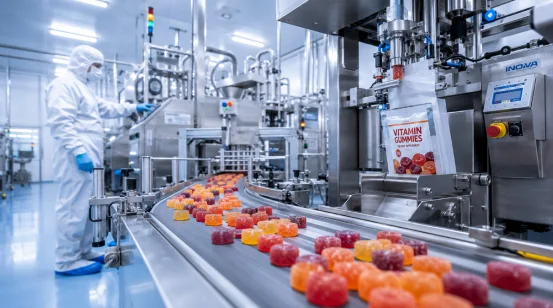
The purchase order should point to the approved formula, sample, product specification, package, artwork, test plan, quantity, schedule, shipping terms, and document package. State how substitutions and changes will be approved. If a bottle, flavor, or raw material becomes unavailable, a phone call alone should not rewrite the product.
Confirm deposits, packaging minimums, material arrival, line scheduling, expected production window, release testing, and balance payment. Commercial lead times often begin after formula and packaging approvals, not after the first inquiry.
Create a shared milestone list covering materials, artwork, production, testing, packing, inspection, freight, and documents. Give each milestone an owner.
Days 55–80: prepare the channel while production runs
Production time should not become marketing’s waiting room. Prepare listing copy, FAQs, customer-service replies, wholesale sheets, product photography plans, email flows, launch content, inventory settings, and fulfillment instructions using approved facts.
Build a claim library with permitted wording, supporting evidence, and prohibited alternatives. This helps creators and sales staff stay consistent.
Set up lot and complaint records before launch. Decide how customer feedback on taste, texture, damaged packages, or adverse experiences will be logged and escalated. The first order is not only inventory; it is the beginning of your quality data.
Days 70–90: release, ship, and plan the reorder
Before shipment, confirm inspection, count, coding, package integrity, agreed test results, batch COA, and destination documents. Compare the packed product with the approved artwork and sample.
Freight timing can move, so avoid announcing an immovable launch date before the goods clear the relevant logistics steps. Build a small buffer for customs, fulfillment check-in, listing review, and replacement of any damaged cartons.
Start reorder planning before the first bottle sells. Use realistic weekly sales scenarios, production lead time, packaging lead time, freight, testing release, and safety stock. A successful launch followed by six weeks out of stock can be more expensive than a modest first month.
Where brands usually lose time
The common delays are not mysterious: changing the target market, asking for a new dose after flavor approval, starting artwork before the facts panel is final, comparing quotes built on different assumptions, waiting too long to order packaging, and allowing multiple people to give the factory conflicting feedback.
A second source of delay is false urgency. Asking every team to finish “today” can produce errors that require another week. Protect the decisions that are difficult to reverse: formula, claims, package specification, printed materials, test scope, and order quantity.
How Red Kangaroo supports the plan
Red Kangaroo provides a one-stop workflow covering formula development, sampling, OEM/ODM production, flavor and texture adjustment, packaging, label support, testing, and export coordination. The company works with supplement brands, distributors, Amazon sellers, Shopify stores, TikTok teams, and other e-commerce channels.
A 90-day target is most realistic when the brand arrives with a clear market, quick approval process, practical formula, and available packaging. Share the launch date, but also share why it matters and which features can flex. That gives the project team a chance to solve the schedule instead of simply agreeing to it.
Perguntas frequentes
Can a custom gummy launch in 90 days?
Sometimes, but complexity, sampling rounds, ingredient sourcing, testing, packaging, approvals, and freight can extend the schedule. Treat 90 days as a planning target, not a guarantee.
What is the fastest launch route?
A supplier-supported formula, standard shape, standard packaging, clear market, limited artwork versions, and fast approvals usually reduce development time.
When should label design begin?
Early brand exploration is fine, but final regulatory copy and print files should wait until formula, serving, package, and claims are approved.
When should a brand place its reorder?
Work backward from projected stockout using production, testing, packaging, freight, fulfillment, and safety-stock time.
What should be approved before the purchase order?
Approve the formula, sample, specification, package, artwork, test scope, quantity, schedule, documents, and change process.