



Varför är detta beslut viktigt för vingummivitaminer från egna märken?
Ett projekt med egna vingummivitaminer börjar vanligtvis med en obekväm fråga: ska varumärket använda en formel som redan finns, eller betala för en formel som bygger på deras egen idé? Svaret ändrar kostnadskurvan innan en inköpsorder ens diskuterats.
Standardformler tenderar att minska tidig osäkerhet. Anpassade gummivitaminer ger varumärket mer kontroll, men de lägger också till fler rörliga delar: aktiva ingredienser, smakmaskering, provomgångar, testbeslut, förpackningsanpassning och efterlevnadsgranskning. För köpare som jämför privata märkesgummivitaminer, den smarta frågan är inte bara vilken väg som är billigast. Det är vilka kostnadslinjer varumärket är redo att hantera.
Vad är den grundläggande skillnaden mellan standardformler och anpassade formler?
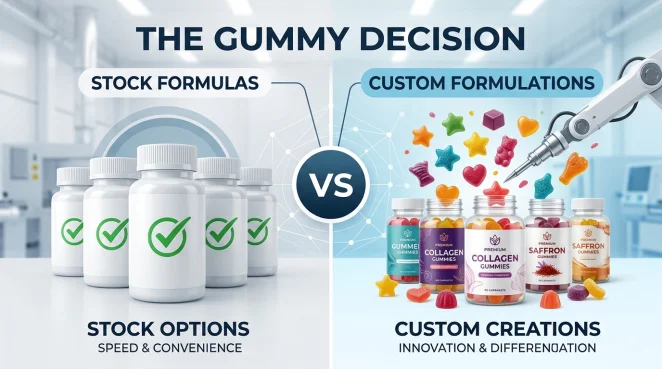
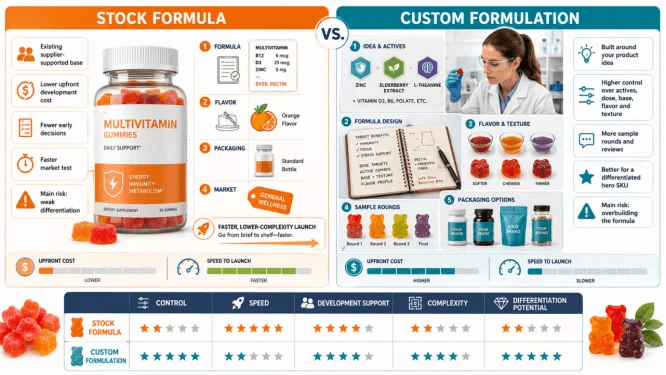
En lagerformel utgår från en leverantörsbaserad bas. Köparen kan fortfarande justera detaljer som smak, färg, form på vingumman, antal flaskor, etikettspråk, kartongdesign eller förpackningsformat, men kärnformuleringen förblir nära en etablerad version.
En anpassad formulering utgår från ett produktkrav. Varumärket kan specificera en aktiv blandning, doseringsmål, sockerinriktning, gummibas, textur, smakprofil, påstående, allergenproblem eller marknadsbegränsning. Den extra kontrollen är anledningen till att många varumärken väljer anpassade gummibjörnar, men det är också därför budgeten behöver ett bredare planeringsspann.
För de flesta köpare av vingummivitaminer från egna märken är denna skillnad i grundprincipen tillräcklig för att begränsa vägen. Om målet är att validera en kategori, håll formeln enkel. Om målet är att försvara en skarpare varumärkesposition kan specialanpassat arbete vara värt den extra budgeten.
Varifrån kommer de verkliga kostnadssiffrorna?
För gummiprojekt är de mest användbara siffrorna ofta inte ett publicerat flaskpris. Det är siffrorna bakom offerten. En formel med en smak, en flaska och en etikettmarknad är ett enklare projekt än en formel med två smaker, två förpackningsformat och två etikettmarknader.
Använd denna ekvation när du jämför citat:
Total lanseringskostnad = formelarbete + ingrediensåtagande + provtagning + testning + förpackningsmaterial + produktionsuppsättning + frakt- och exportdokumentation.
| Kostnadsdrivare | Planeringsnummer för aktieformel | Anpassad formuleringsplaneringsnummer | Vad det vanligtvis ändras |
| Formelversioner | 1 befintlig bas | 2 till 4 granskade versioner | FoU-tid, provmaterial, godkännandearbete |
| Smaker | 1 smak | 2 eller fler smaker | Smakmatchning och sensorisk granskning |
| Paketformat | 1 flaska eller påse | 2 format | Förpacknings-MOQ, konstverk, fyllningskontroller |
| Etikettmarknader | 1 språk eller marknad | 2 eller fler marknader | Påståenden, näringspaneler, varningstexter |
| Särskilda aktiva ingredienser | 0 till 1 välbekant aktiv blandning | 2 eller fler speciella aktiva element | Inköp, smakmaskering, stabilitet, efterlevnad |
| Testomfattning | Överenskomna utgivningstester | Versionstest plus ytterligare kontroller vid behov | Ledtid och dokumentation |
Det är därför en billigt utseende specialdesignad idé snabbt kan bli dyr. Om projektet går från 1 formel, 1 smak, 1 förpackning och 1 etikettmarknad till 1 formel, 2 smaker, 2 förpackningar och 2 marknader, har varumärket skapat 8 kommersiella kombinationer för att koordinera.
Vilka börsnoterade siffror bör köpare ta hänsyn till?
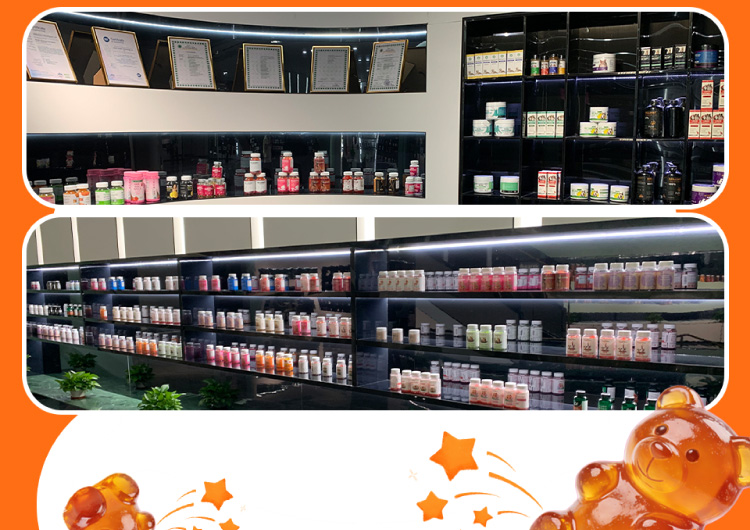
Kapacitetssiffror ersätter inte en offert, men de hjälper köpare att bedöma om en leverantör kan hantera komplexitet. Röd känguru driver fyra dedikerade produktionslinjer för gummiprodukter, sju GMP-standardiserade produktionsverkstäder och mer än 200 uppsättningar importerad produktionsutrustning. Den dagliga gummiproduktionen kan nå upp till 6 miljoner enheter, med exporterfarenhet till fler än 50 länder och regioner.
Dessa siffror är viktiga eftersom skala påverkar schemaläggningsflexibilitet, processkontroll och planering av upprepade order. En liten pilot-SKU och en lansering av en detaljhandel på flera marknader sätter väldigt olika press på provtagning, förpackningsupphandling och produktionskoordinering. Köpare bör fortfarande begära en projektspecifik offert.
Hur kan ett extra alternativ mångdubbla budgeten?
Här är det enklaste sättet att se multiplikationseffekten. Ett marknadstest med en aktiemarknadsformel kan involvera 1 basformel, 1 smak, 1 förpackningsformat och 1 etikettmarknad. Det skapar 1 huvudsaklig kommersiell konfiguration att koordinera.
En specialdesignad SKU kan fortfarande börja med en kärnformel, men om varumärket efterfrågar två smaker, två förpackningsalternativ och två etikettmarknader skapar projektet åtta kommersiella kombinationer. Det betyder inte att fakturan blir åtta gånger högre. Det betyder att det finns fler godkännanden, fler filer, fler förpackningskontroller och större risk för förseningar.
Det är här som projekt med egna märkesvaror för gummivitaminer i tysthet kan glida bortom den ursprungliga budgeten. Köparen kanske tror att det bara har lagt till ytterligare en smak eller ytterligare en marknad. Fabriken måste kontrollera om det valet påverkar smak, konstverk, förpackningslager, testdokument och exportpappersarbete.
Vilka dolda kostnader är lätta att missa?
Ingrediensens MOQ är den första. En välbekant vitaminblandning kan vara lättare att få tag på i förutsägbara mängder, medan en nischad botanisk ingrediens, märkesingrediens eller specialsötningsmedel kan kräva ett större åtagande av råmaterial. Om den aktiva ingrediensen är bitter, instabil, värmekänslig eller svår att maskera, är formelkostnaden inte bara ingrediensen i sig. Det är det arbete som krävs för att göra gummigodiset acceptabelt.
Förpacknings-MOQ är den andra. En flaska, kork, etikett, kartong, påse, displaylåda eller fraktförpackning kan komma från olika leveranskedjor. En standardflaska med en etikett är enkelt. En speciallansering med två flaskstorlekar och tvåspråkiga etiketter kräver striktare kontroll av grafik och mer lagerplanering.
Testning är den tredje. Ett enkelt kosttillskottsgummi kan följa en överenskommen plan för releasetestning. En formula med nya aktiva ingredienser, ovanliga påståenden eller flera målmarknader kan behöva ytterligare kontroller. Innan du väljer väg, granska förväntningarna på tillverkningskvalitet genom OEM- och ODM-tillverkningsprocess och fråga vilka tester som ingår i den angivna omfattningen.
När är den lägre initiala kostnaden inte ett bättre alternativ?
En lagerformel kan vara rätt val när varumärket testar efterfrågan, bygger sin första produktlinje eller arbetar under ett kort lanseringsfönster. Det håller samtalet rent: välj kategori, godkänn provet, förbered förpackningen, bekräfta efterlevnadsdetaljer och gå vidare till produktion.
Den lägre initialkostnaden blir mindre attraktiv när produkten behöver ha ett premiumuttryck, stå på en fullsatt marknad eller stödja en presentation från en detaljhandelsköpare. I dessa fall kan en anpassad formulering hjälpa varumärket att förklara varför produkten förtjänar hyllplats eller ett högre försäljningspris.
Ett funktionellt exempel, som till exempel en lansering av saffransgodis från privata märken visar hur ingrediensval, målgrupp, användningsfall och kanalpositionering kan fungera tillsammans utan att formeln förvandlas till en lång funktionslista.
Hur ska ett varumärke välja innan det ber om en offert?
Börja med att räkna variabler. Hur många formler, smaker, förpackningsformat, etikettmarknader och speciella aktiva ingredienser behövs verkligen för den första lanseringen? Om svaret är en av varje kan en standardformel vara tillräckligt. Om svaret fortsätter att utökas, behandla projektet som anpassad utveckling och budgetera för den komplexiteten.
Bestäm sedan vad kunden faktiskt kommer att märka. En kund kanske inte bryr sig om att FoU-filen är tekniskt unik om fördelen är svår att förklara. Å andra sidan kan en väl vald aktiv blandning, serveringsformat eller textur göra produkten lättare att sälja när varumärket har rätt målgrupp.
Innan projektkraven skickas är det också värt att granska vår fabriksbakgrund Så formeldiskussionen inkluderar kapacitet, kvalitetskontrollkontext och exportstöd snarare än bara en fråga om enhetspris.
Vad bör inkluderas i offertförfrågan?
En användbar offertförfrågan bör synliggöra kostnadsdrivarna. Inkludera formeltyp, aktiva ingredienser, doseringsanvisning, preferens för gummibas, smak, färg, form, förpackningsformat, antal flaskor, etikettmarknad, certifieringsbehov, testförväntningar och lanseringstidpunkt.
För standardformler, fråga vilka ändringar som ingår och vilka ändringar som gör projektet till specialanpassat arbete. För specialanpassade gummivitaminer, fråga hur formelversioner, provrundor, specialingredienser, förpackningens MOQ och testomfattning kommer att hanteras. Detta förhindrar att offerten blir en gissningslek.
Det bästa valet är det som varumärket kan finansiera, förklara, producera, leverera och beställa om. Lagerförsedda formuleringar skyddar hastighet och budgetdisciplin. Anpassad formulering skyddar differentiering när produktidén är tillräckligt stark för att motivera det extra arbetet.