



Two quotations lie open on the purchasing desk. The price gap is twenty-two cents per bottle, and somebody has circled $8,800 in the margin. Quality cannot find the finished-product tests in the cheaper offer. Meanwhile, a pallet of printed labels is still at the incumbent’s factory. The circle stays on the page, but nobody should enter it as a saving yet.
This is a comparison of one gummy with itself at two factories. Keep the formula version, gummy count, bottle, closure, testing scope and shipping basis together on the first page. If those differ, resolve the difference before calling the cheaper line a saving. Our gummy OEM services page outlines the kinds of manufacturing work involved, but a project quotation needs to name the actual work being compared.
Find the mismatch before doing the arithmetic
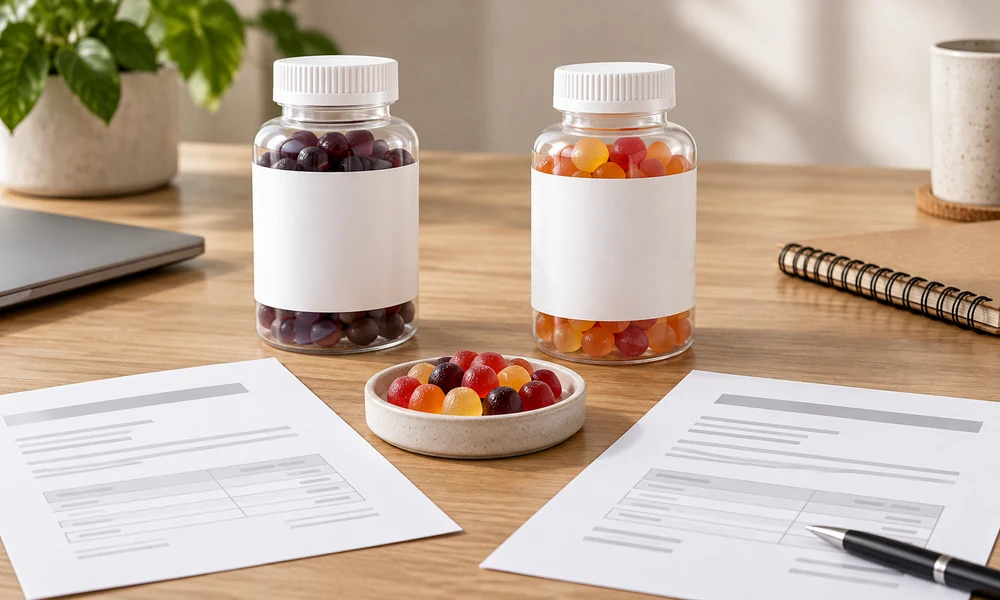
Put the two quotations beside the most recent purchase order. Highlight anything whose unit, quantity or scope changed. Does one supplier quote a bottle of sixty gummies and the other a pouch of thirty? Is freight included in one price and separate in the other? Has a proposed formula changed the active target or finished weight? Stop at the first unresolved difference. The model cannot repair a mismatched product by adding more decimal places.
Next, open the current specification. The pilot might taste close enough, yet the sheet still needs entries for active content, pack components and release criteria. Send it to the candidate with two columns marked “accepted” and “change requested.” Until it comes back, leave the relevant cost cell open. A zero would imply the matter was settled, and it isn’t.
Our custom-versus-stock formula cost analysis deals with choosing a recipe at the outset. A transfer creates another problem: which work must be paid for again? A candidate’s stock formula may be worth evaluating, but its quote should sit beside the current-product comparison as a separate proposal.
Put the transfer invoices in their own column
The first saleable shipment may be months away. A mold deposit can be due next week; the sample courier will send an invoice long before the trial is approved. Artwork adaptation and any extra testing have their own payment dates. Put an owner and payment month beside each line, with a question mark for an unquoted amount. The cash pinch can arrive long before the model shows a profit.
There is also the awkward inventory conversation. The incumbent may be holding your printed labels or bottles. Find the purchase record, count the balance and ask whether the components can move. Check who controls the editable artwork and formula records, too; a transfer can stall while those files are being located or released. If components cannot move, record the write-off once. The original purchase and the later disposal are not always two separate losses. Finance can only see the difference when the worksheet names the actual cash flows.
Recurring costs get a second column: bottle and components, regular testing, freight, storage, rework and reorder terms. Check the second order in particular. The first-run discount may vanish on the reorder. Ask for that price now. If the volume tiers differ, use order sizes that purchasing can actually fund; the cheapest tier may require an impractical stock commitment.
Walk an illustrative switch through the first year
Here is a made-up order book for the calculation. The forecast covers 40,000 bottles. At $2.10 from the incumbent and $1.88 from the candidate, the headline gap is clear. Add the candidate’s four cents of freight and two cents of routine testing per bottle. Now the running advantage comes to $6,400 a year. Qualification and transfer take a further $5,000 once. That leaves $1,400 after year one. Measured against the transfer spend, the first-year return is 28%; at an even run rate, recovery takes about 9.4 months after commercial production starts. None of these figures is a Red Kangaroo price or a forecast for another brand.
| What finance needs | Current arrangement | Candidate case |
| Same annual volume | 40,000 bottles | 40,000 bottles |
| Bottle price | $2.10 | $1.88, plus $0.06 freight and testing |
| Annual running difference | Baseline | $6,400 in favor of candidate |
| Moving bill | None | $5,000 once |
| Year-one result | Baseline | $1,400 net; 28% on the moving bill |
| Simple payback | — | About 9.4 months after production starts |
Start counting those 9.4 months when saleable commercial bottles begin leaving the new line; the pilot invoice is an earlier cash event. Plot the deposit, the incumbent’s last order, release of the candidate batch and its arrival at the warehouse on separate lines. The buyer may need to pay two factories before the cheaper stock is available to sell. That matters even when the twelve-month sum is positive.
Let the pack and MOQ challenge the result
The current bottle might be printed and sealed while the new quote covers a plain container. Set both packs side by side at the meeting and point to the one the retailer will receive. Our branding and packaging options can help specify its parts. Get that exact assembly priced. The first print run may demand cash well before the lower unit cost pays back.
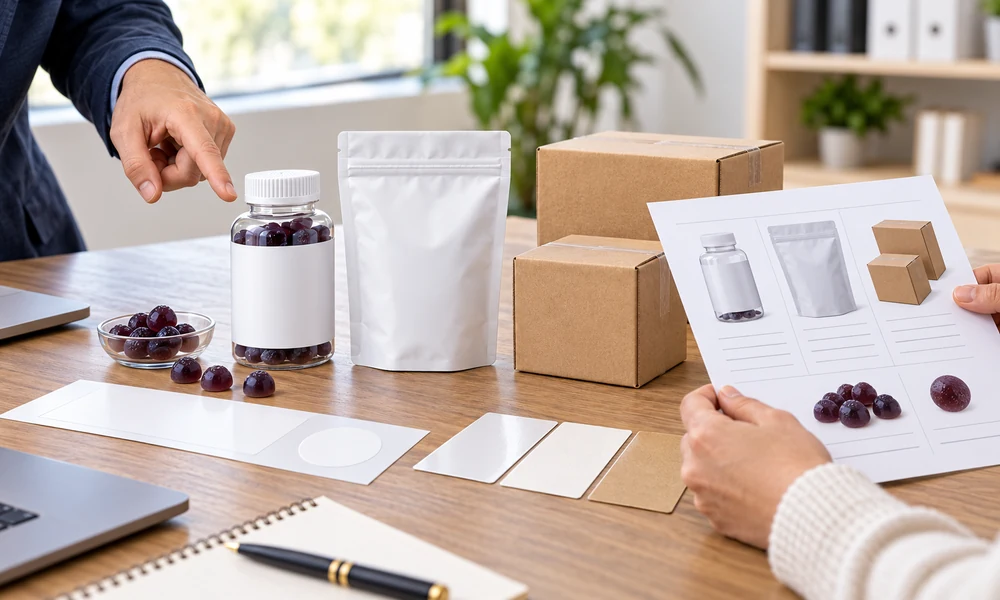
Purchasing currently orders 10,000 bottles a quarter. The candidate wants a 20,000-bottle run. Those extra cartons remain saleable inventory, yet their invoice arrives before much of the stock moves. Put expected weekly sell-through next to the payment date. A possible expiry or redesign loss gets its own row, away from the working-capital line.
Price a setback without pretending to know its probability
The incumbent’s rejection and return history is available in the brand’s records. There may be no comparable year of candidate production for this exact gummy. Do not turn a good-looking pilot into a numerical claim about future defects. Instead, show what one rejected batch, one repeat test or one missed promotion shipment would cost. Keep those items outside the base case until the underlying evidence supports them.
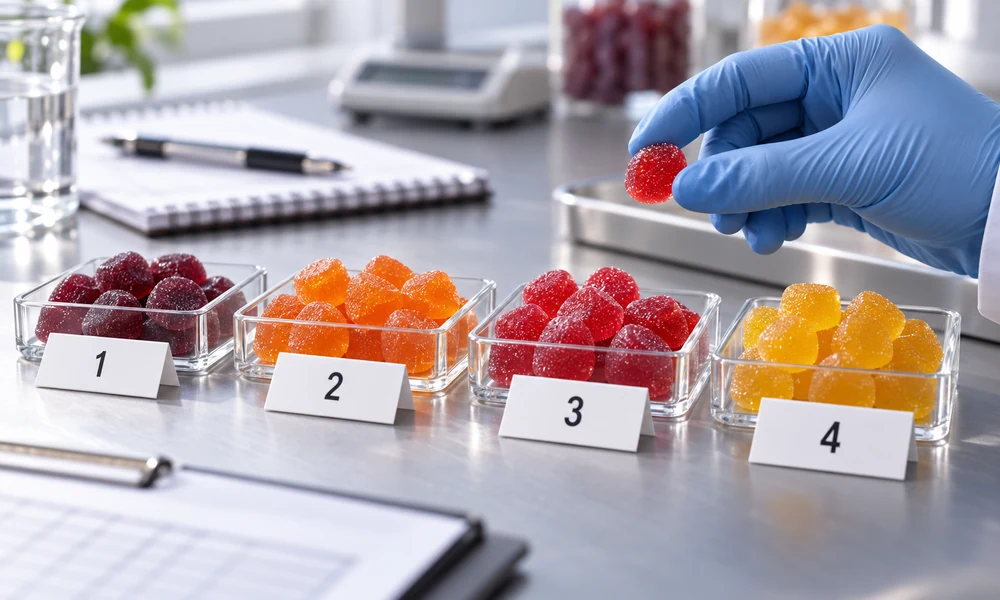
Our gummy testing and stability guide can help identify the work behind a quote. Mark each test as a transfer event, a batch routine or a response to a later change. If the same assay appears on the startup bill and in every-order charges, ask whether both entries are real before adding them.
The promotion calendar provides another check. “Finished in May” may still mean that testing, release and transit push saleable stock beyond a June launch. Ask for those dates separately. If they do not fit, the brand must price an incumbent bridging order or change the promotion. Do not hide an invented lateness percentage inside the bottle cost.
Take a decision to the supplier meeting
At approval, hand everyone the same page: scope differences, startup invoices, annual running difference, MOQ cash and first saleable-stock date. Each number gets a source in the next column. An emailed candidate quote can be checked. A sales forecast is a planning assumption. One more test or print run could swallow the illustrative $1,400 benefit. Get the disputed charge in writing before purchasing issues an order.
The meeting may end with a switch, a negotiation over the first run, or no move at all. A cheaper offer cannot supply a launch after the promotion has ended. A smaller print commitment might rescue it. If the team stays because the incumbent has reliable stock on hand, record that reason. Also record the document that would make the team reconsider.
For a project-specific comparison, contact Red Kangaroo with the current quote, formula and package specification, annual demand, first-order plan and reason for reconsidering the factory. We can respond against those assumptions; a universal saving figure would be less useful than the right question answered on your own product.