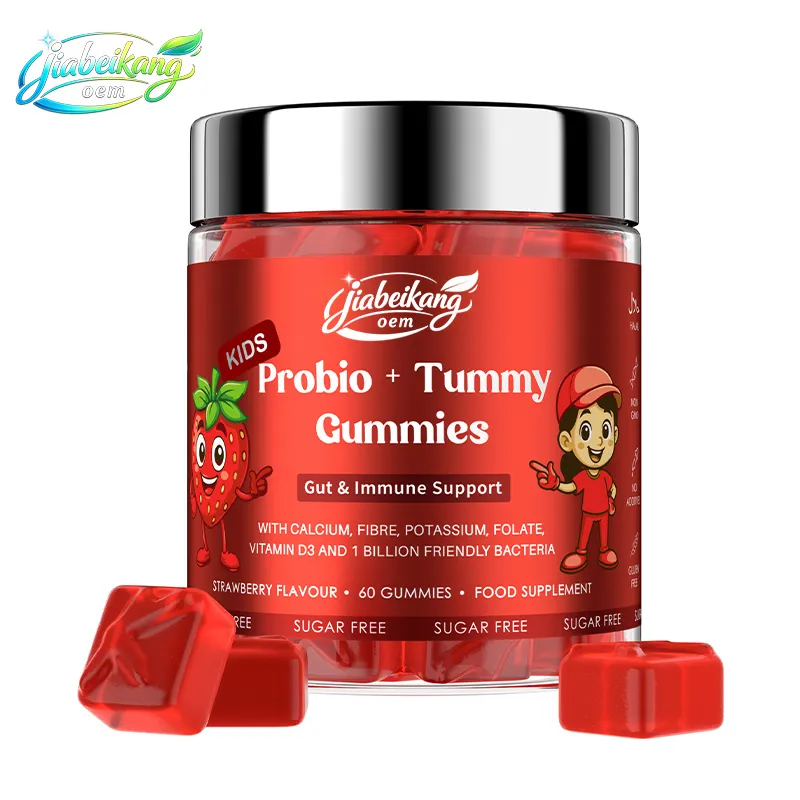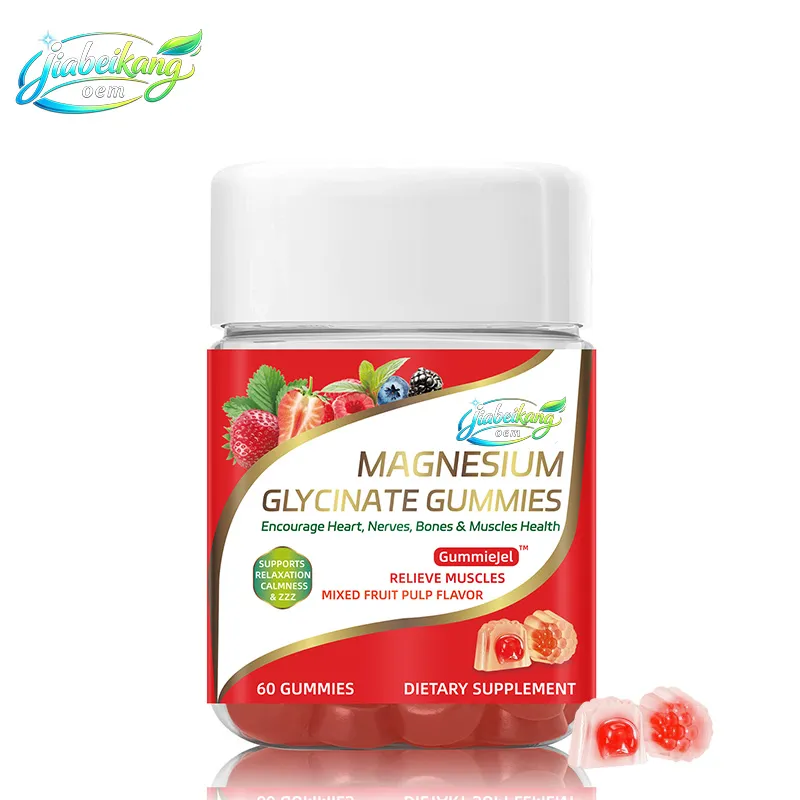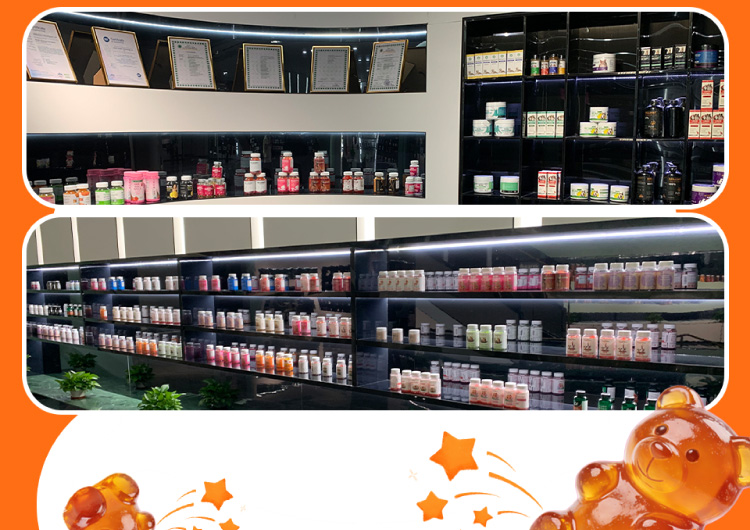




Picture the first sample meeting. The strain supplier’s pouch says “keep refrigerated.” The sales team wants a gummy that can sit in a warehouse and travel by parcel in July. Which instruction goes on the bottle? We cannot settle that from the pouch. It describes the incoming material.
The label will describe a gummy that has been processed, sealed, shipped, and opened at home.
The NIH Office of Dietary Supplements notes that probiotic supplements can be refrigerated or kept at room temperature, depending on the product. For our probiotic gummy product options, we would still ask a brand for the strain, its intended CFU statement, pack, and sales route before discussing the storage line.
The product page is a starting point, not a stability report for the new formula.
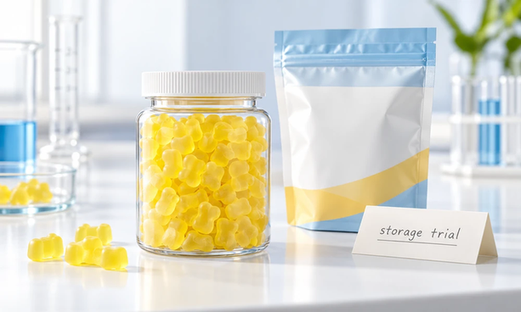
Illustrative: probiotic gummy bottle with storage planning notes
The storage question belongs to the finished SKU
I would start with the bottle that will reach a customer, even if it is still an empty mock-up. A manufacturer may be able to protect the same strain in two formulas, yet the packs and routes can make one practical for a chilled channel and the other for ambient sale.
The word “probiotic” on the label does not decide either case.
Suppose the proposed front panel says one billion CFU. I would circle the number and write a date beside it. Does that count apply in the mixing room, on release, or when the consumer takes the last gummy? The number can fall while the bottle waits.
The NIH health-professional fact sheet points readers toward counts that hold through the end of shelf life.
Next draw the route from the packing line. A cold room at the factory tells us very little if the distributor will use ordinary freight. A retail chain with chilled receiving may have a quite different answer from a direct-to-consumer seller using parcel vans.
What does the strain supplier actually promise?
I would ask the supplier to show the specification behind “shelf stable.” Which strain and carrier were tested? How is the count measured? Was the bag unopened, and until what date was the count promised? Those answers describe the ingredient.
After it has passed through a gummy process and sat in a consumer pack, we have a different material to evaluate. A cold pouch in the warehouse settles neither retail choice.
Watch the units. A certificate reading CFU per gram of supplier blend cannot be pasted into a two-gummy serving claim. The team needs to calculate the input, then measure the finished serving at release and later dates. If someone proposes “the usual overage,” ask whose strain, process, and pack produced that number.
The probiotic gummy category gives a sense of the format a shopper will see. In the development brief, I would replace “probiotic blend” with the supplier item and strain designation. If sourcing later changes either the strain or its carrier, the old storage reasoning needs another look.
Compare two distribution paths before approving the label
Cold versus ambient looks like a two-column decision until a bottle spends an afternoon on a loading dock. A room-temperature route has its own hard days, especially for parcel delivery. We would compare both paths against the channel the brand can actually run.
|
Decision point |
Refrigerated route |
Ambient route |
|---|---|---|
|
Storage promise |
Name the chilled range and where it begins |
Name the ambient range the pack can tolerate |
|
Route evidence |
Look at warehouse, freight, and retailer logs |
Include the hottest likely parcel leg |
|
Count evidence |
Follow CFU in the retail pack over the cold period |
Follow CFU in that pack under ambient conditions |
|
Practical snag |
A broken cold chain needs a hold decision |
Summer delivery may exceed the trial |
|
Artwork |
Tell buyers to refrigerate if the route can honor it |
State only the conditions the data cover |
A parcel route can be sketched with five boxes: factory, export, fulfillment, delivery, and home. I would leave a blank beside each box for the expected temperature and the evidence behind it. A blank at “delivery” is common.
It is also a reason to design a sensible excursion study before promising shelf storage.
Write down the awkward case before it happens. A refrigerated shipment arrives warm: who puts the lot on hold, and which record decides release? A summer parcel is delayed: which exposure has the product actually survived in testing? The quality agreement should name the decision owner.
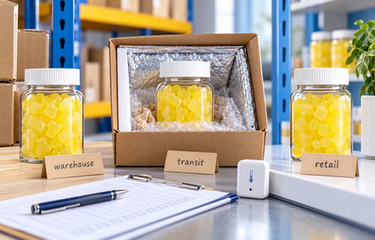
Illustrative: probiotic gummy distribution route and temperature checkpoints
Test the sealed retail pack under realistic conditions
An open tray of gummies is useful for a quick look at color and texture. It cannot stand in for a closed retail bottle. The trial pack needs the planned closure, fill count, seal, and desiccant decision. If marketing switches to a pouch later, we would rerun the relevant pack work.
The gummy testing and stability guide covers the broader checklist. In this project I would keep the CFU result beside each storage condition.
When someone sends back “pass,” I would ask for the page behind it. Which lot and strain were counted? Was the result per gummy or per serving? How old was the pack, and where had it been kept? The retained pieces should be opened and tasted alongside the CFU review.
A live count cannot redeem a bottle of fused gummies.
A hot, short trial can reveal trouble early. It cannot be treated as a magic conversion into a two-year label date. We would want real-time data, or another scientifically justified basis, for the date and storage wording the brand plans to print.
The FDA’s dietary supplement CGMP guide says a firm should support a shelf-life date it prints and hold reserve samples in line with the label’s storage instruction. For this project, that means the label and retained-sample cabinet cannot tell different stories. FDA does not prescribe one refrigerator answer for all probiotic gummies.
One unglamorous question belongs on the lab call: can the method recover the organism from this particular gummy? The incoming powder and a sticky, acidic finished piece may not behave alike during preparation. If the method is shaky, a change in reported CFU may say as much about recovery as about survival.
Keep the method record with the lot and temperature log.
Decide what the storage statement can say
On a label proof, “store in a cool, dry place” can look reassuringly harmless. Ask what “cool” meant in the test chamber. If the answer covers a narrow range, the words may need to be more precise.
Likewise, a chilled instruction should lead to a chilled distribution plan, not end at the printer.
I would read the storage sentence next to the count and the use-by date, not on a separate artwork screen. The NIH fact sheet notes that CFU can decline as a product ages.
A large number recorded on day one may look impressive, but it cannot answer what the bottle contains at its stated date.
Artwork for the US is not automatically artwork for Europe. The microorganism name, quantity presentation, claims, and even product classification deserve a market review. Our branding and packaging service can enter the process once the technical team has fixed the formula and the evidence for the chosen storage direction.
One more issue is consumer use after opening. If repeated opening is expected, consider an in-use check before writing after-opening instructions.

Illustrative: sealed probiotic gummy pack and viability sample review
A manufacturer brief for the next trial
I would be pleased to receive a one-page brief that says, in ordinary language, “We sell by parcel, cannot use cold freight, and expect summer deliveries.” Add the strain document, target CFU and its time point, serving, gummy base, pack, markets, and desired use-by date.
A plain constraint is much more useful than a vague request for a shelf-stable probiotic.
The reply should say what the first trial will decide. Perhaps it is whether the gummy can be made and still tastes right. Then the lab must show how it will count the organism in that matrix, and which storage exposures will be tested in the final pack.
The results may favor ambient sale, a cold route, a shorter date, or a changed formula. It is fine to learn that from the trial rather than pretend the answer was known at quotation.
Send the brief through our contact page. Send the proposed strain documents and route assumptions with the inquiry. That gives our team a concrete basis for a trial.