



Approving a gummy sample feels like the moment a product becomes real. The flavor is right, the color looks right and the texture finally matches the brief. It is tempting to treat that approval as the last technical decision before placing a purchase order. In practice, it is the beginning of scale-up. A development sample may be made with smaller tools, shorter transfer distances and more direct manual attention than a commercial batch. Production introduces larger kettles, pumps, depositors, drying rooms, coating equipment and packaging lines. None of this means the sample is unreliable. It means the approved sample must be translated into a controlled production process rather than copied by eye. For brand owners, importers and distributors, understanding that transition makes quotations, timelines and approvals much easier to manage.
Freeze the approved target before discussing scale
The team first needs a stable definition of what was approved. A bag of sample gummies and a message saying “this one is good” leave too much room for interpretation. The approval record should identify the sample code, formula revision and date. It can also record the target flavor, color, shape, piece weight, coating, serving size and expected count per container. Photographs are useful for appearance, but they should support—not replace—written specifications. Some attributes need a reasonable range rather than one perfect number. A gummy is not a machined metal part. Piece weight, moisture and color can vary within controlled limits. The important question is whether the range remains suitable for the declared serving, sensory experience, shelf life and packaging operation. If the brand changes the active load, sweetener system, shape or serving after approval, the manufacturer may need to repeat part of the development work. Label artwork should therefore wait until the commercial formula and serving logic are stable.
Raw-material behavior becomes more visible
At small scale, a powder may appear to disperse easily because it is added slowly and mixed by hand. In a larger vessel, the same material may float, clump, settle or thicken the mass. Particle size, density, solubility and hygroscopicity can affect how an ingredient behaves. Botanical extracts and minerals can also bring strong color, bitterness or acidity. An ingredient that contributes only a little mass may still have a large sensory effect. Conversely, a high-load formula can change the structure of the gummy simply because a substantial part of each piece is no longer the base system. This is why a manufacturer should work from identified raw-material specifications, not only an ingredient name. Two materials sold under a similar name may differ in carrier, concentration, assay, particle size or processing behavior. Supplier changes should be reviewed before they are introduced into the commercial formula.
Heating and holding time are not identical at every scale
A larger batch generally takes longer to heat, mix, transfer and deposit. The product may spend more time in warm equipment, and temperature can vary across the process if controls are not established. Those differences matter because gummy structure depends on a sequence of events. The base must be prepared correctly, ingredients must be added at suitable stages, and the mass must reach the depositor within a workable range. Too much heat or an extended hold can affect flavor, color and the performance of heat-sensitive components. A mass that cools too far can become difficult to deposit consistently. A commercial process therefore uses defined operating ranges and checkpoints. Operators should know which readings are critical, when additions occur and what to do if the process moves outside the intended window. The objective is repeatability, not improvisation around every kettle.
Depositing reveals the relationship between formula and shape
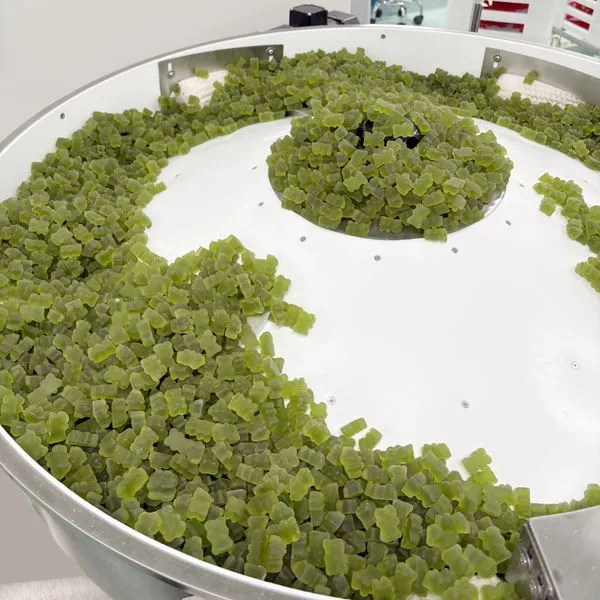
The approved shape is not only a design choice. Its cavity volume, depth and surface detail affect depositing and demoulding. A highly detailed shape may look attractive in a drawing but be less forgiving when the formula contains particles or has a narrow processing window. During scale-up, the team checks deposit consistency, piece weight and how cleanly the gummy releases. If starch moulding is used, starch condition and impression quality become part of the process. Kangourou roux starch-mogul capability can be useful for projects that need particular shapes, sizes or production characteristics, but the formula and tooling still have to be evaluated together. Brands should be cautious about ordering a large quantity of printed packaging before the final shape, piece weight and serving count have been confirmed on production equipment. A small change in piece dimensions can influence how many gummies fit comfortably in a bottle or pouch.
Conditioning is part of production, not idle waiting
Freshly deposited gummies are not always ready to pack. They may need controlled time for moisture and texture to settle. Temperature, humidity, airflow, piece size and formula all influence this stage. Development samples can condition differently from a full production load because trays, room occupancy and airflow patterns are different. The commercial trial helps the manufacturer define when the gummies are ready for finishing and packing. Rushing this step can create avoidable problems such as surface tack, pieces sticking together or texture changing after packing. Excessive drying is not desirable either. The goal is the agreed product range, not the driest possible gummy. The coating stage also deserves attention. Oil, wax, sugar or acid sanding affects appearance and handling. The chosen finish should be assessed against the package, climate and desired consumer experience.
A pilot or first production batch should answer specific questions
“Make a trial” is too vague unless the team agrees on what the trial must prove. Useful scale-up questions include:
- Can the mass be mixed and transferred without separation or excessive foaming?
- Does the depositor hold piece weight within the agreed range?
- Does the shape release cleanly and retain its detail?
- How long does conditioning take under defined room conditions?
- Does the finished texture match the approved target after packing?
- Does the formula run through counting, filling and sealing equipment?
- Are laboratory samples representative and sufficient for the test plan?
The answers should be documented. A trial is valuable because it converts assumptions into process knowledge that can be used for later batches.
Testing must match the commercial batch and its purpose
Testing plans vary by formula, destination and customer requirements. The plan may cover microbiological quality, selected contaminants, active components or other agreed attributes. Sampling points and quantities should be decided before production. A result from a development sample should not automatically be treated as the release result for a commercial batch. The commercial lot needs its own identity and relevant records. If an analytical method has difficulty with the gummy matrix, that issue is better discovered before the launch deadline. U.S. dietary supplement current good manufacturing practice requirements include master manufacturing records and batch production records for relevant operations. Brands selling in other markets should confirm the rules that apply to their product classification and destination. This article is operational guidance, not legal advice.
Packaging trials belong in the scale-up plan
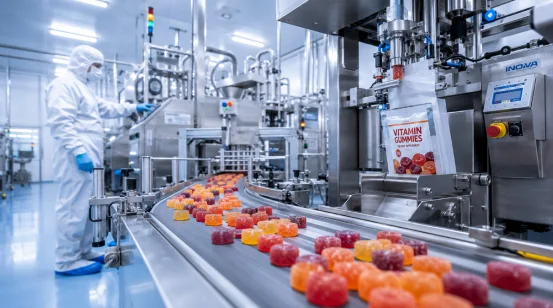
The first commercial run is also an opportunity to confirm bottle or pouch capacity, count accuracy, closure application, liner sealing, coding and label position. Packaging components that look correct on a specification sheet can behave differently on a running line. Ask for confirmation using the actual or technically equivalent components. If final printed packaging is not yet available, agree on what can be proven with plain samples and what must be checked later. Transit conditions matter as well. Gummies packed for a warm, humid route may need a different review from products moving through a cooler supply chain. No package can compensate for uncontrolled storage indefinitely, so case configuration and shipping instructions should be part of the conversation.
Build realistic approval gates into the timeline
A practical project plan separates formula approval, scale-up, test review, artwork approval, packaging procurement and commercial release. These activities overlap, but they are not interchangeable. One common source of delay is treating every task as if it can start at once. Printed packaging may have a longer lead time, yet ordering it before the formula and count are stable creates rework risk. Laboratory testing may also require more time than physical production. The brand and manufacturer should agree on who approves each stage and how quickly comments will be returned. Consolidated feedback is much easier to implement than separate messages from sales, design and regulatory teams.
Questions to ask before authorizing commercial production
Before the order moves forward, ask:
- Which approved sample and formula revision control the order?
- What process or ingredient differences are expected at commercial scale?
- Is a pilot or first-batch review required?
- Which specifications will be checked in process and at release?
- Which tests apply to the commercial lot?
- Have the shape, piece weight, serving and package count been confirmed together?
- Are final packaging components available for a line trial?
- What happens if the first commercial output differs from the approved range?
Clear answers do not eliminate every production variable. They create a shared method for managing those variables. An approved sample remains the product target. Scale-up is the disciplined work of making that target repeatable on real equipment, with real packaging and records that connect the finished batch to the agreed specification. Brands that plan for this stage are better positioned to make calm decisions before production rather than urgent corrections after it.