



Choosing a gummy manufacturer is not only a price comparison. A low quote can look attractive until the first production delay, label problem, weak COA, or sticky shipment appears. For private label brands, the right question is not “Who can make gummies?” It is “Which gummy factory can handle this formula, package, market, and delivery risk without turning every small issue into a fire drill?”
At Red Kangaroo, we often meet buyers at that messy comparison stage. One supplier says it owns a gummy factory. Another talks like a factory but only sends catalog photos. A third has a good sample but vague paperwork. Before money moves, we usually tell buyers to slow down and check the boring things first: who makes the product, what documents match the facility, who controls the batch, and who will answer when something changes.
What should a private label brand check first?
Factory identity means confirming who physically makes the gummies, where production happens, and who controls the site, batch records, and schedule.
Ask where the gummies are made, who controls the site, and whether gummies are part of daily production or just a product line the sales team can source. A supplier can sell gummies nicely and still have little control over equipment, workers, batch records, or the production calendar.
For buyers building private label gummies, this early check is surprisingly revealing. If a supplier struggles to answer basic questions about formula options, packaging choices, sample timing, or target-market documents, the fast quotation at the beginning may not mean much.
Which certifications and compliance documents matter?
Compliance documents are evidence that a facility follows defined quality, food-safety, and market-entry requirements for the product and target market.
Depending on the target market and sales channel, buyers may ask about GMP, HACCP, ISO 22000, Halal, Kosher, BRCGS, FDA facility registration, or other documentation. The exact requirement depends on the product and market, so avoid assuming one certificate covers every formula.
A serious supplier should be able to talk about specifications without hiding behind certificate logos. For U.S.-oriented dietary supplement projects, 21 CFR Part 111 gives buyers a useful reference point on components, batch records, finished-product specifications, packaging, labels, and reserve samples. You do not need to recite the rule. Just ask what the factory checks, who signs off, and where the record is kept.
How can buyers judge real production capacity?
Real production capacity is the factory’s practical ability to schedule, make, test, pack, and release your order consistently—not merely a stated daily output.
Your order still depends on line availability, formula difficulty, drying time, packing speed, release testing, and whatever else is booked that month. Ask which gummy line could run your product and what would happen if the drying room or packaging line is already full.
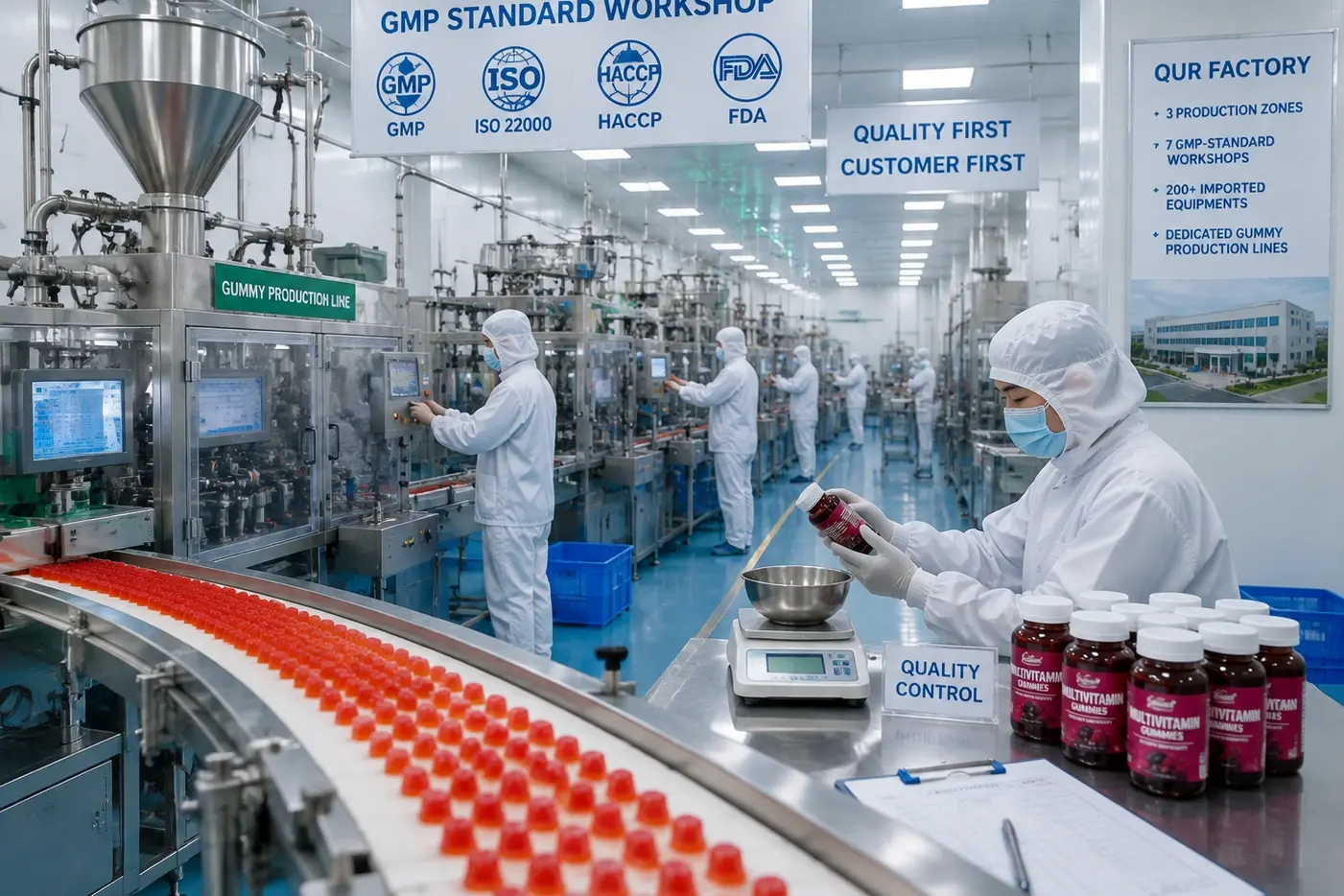
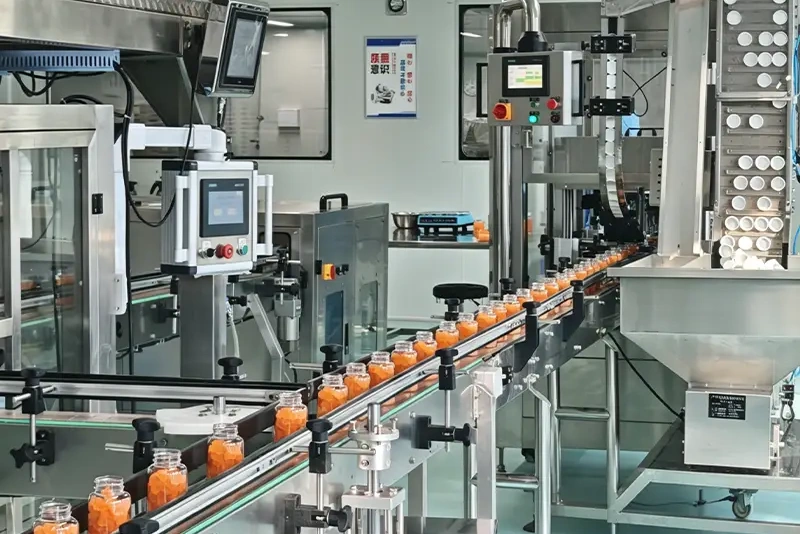
When buyers review our factory background, they can see the scale behind our gummy work: 3 production zones, 7 GMP-standard workshops, more than 200 sets of imported production equipment, and dedicated gummy production lines. Those numbers matter most when they are connected to repeatable procedures, not used as empty bragging.
What should the factory show about quality control?
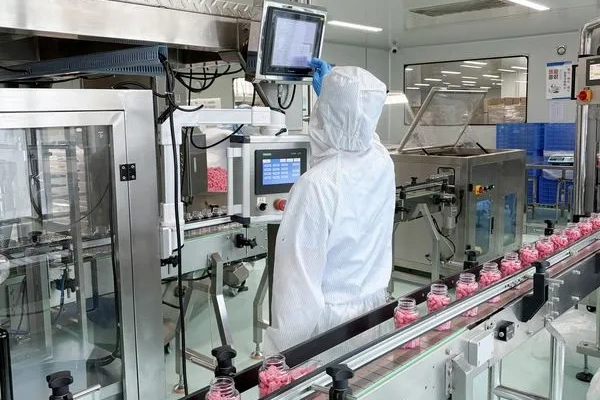
Gummy quality control is the documented system for approving materials, monitoring production, testing finished batches, and releasing products against agreed specifications.
Ask how raw materials are approved, whether each batch has incoming inspection records, and what happens when a material does not meet specifications. For finished products, ask which tests appear on the COA and which tests require third-party labs. Common discussions include appearance, count or weight, microbiology, heavy metals where required, active content, and packaging checks.
This matters for functional gummies, vitamin gummies, botanical blends, and any product with a tight label claim. A sample tells you whether the idea is promising. It does not prove that a commercial batch will behave the same way. Ask how the factory carries the approved sample into bulk production and final release.
How should brands evaluate formulation support?
Formulation support is the manufacturer’s ability to turn a product concept into a feasible, compliant, stable, and scalable gummy formula.
The team should be able to discuss active dosage, flavor masking, texture, acid balance, color stability, vegetarian or gelatin-based systems, sugar-free options, allergen concerns, and packaging fit. If a buyer brings a new concept, the factory should help identify what is feasible before the project turns expensive.
For OEM and ODM manufacturing, the key difference is how much development work the buyer expects. A stock formula may move faster because the factory already understands its behavior. A custom formula may need more sampling, ingredient review, taste work, and stability consideration. Neither path is automatically better. The right choice depends on launch timing, budget, uniqueness, and regulatory needs.
What communication signs reveal a reliable gummy supplier?
Communication is not a soft issue. It is manufacturing risk in plain clothes. A quick reply that avoids details still leaves the buyer guessing. A slower reply with documents, dates, and a next step is usually easier to work with over a full project.
What should be included in a factory audit checklist?
A factory audit checklist is a standardized set of questions used to compare suppliers on facility identity, compliance, capacity, quality, formulation, packaging, and project control.
Use the checklist below to make every supplier answer the same kind of question. If one answer is missing, do not panic. See whether the team can come back with a clear document, photo, certificate, or explanation by the next working day.
| Audit area | What to ask | Red flag |
| Factory identity | Do you own or directly operate the gummy production site? | The supplier cannot explain the actual production location. |
| Compliance | Which certificates apply to this product category and facility? | Certificates are expired, unrelated, or issued to another site. |
| Capacity | How many gummy lines are available and how is production scheduled? | Only a daily output number is given, with no scheduling detail. |
| Quality control | Which tests appear on the COA and who approves release? | The answer is limited to “we check quality.” |
| Formulation | Can the team review dosage, taste masking, texture, and stability risk? | The supplier quotes before understanding the formula. |
| Packaging | Which bottle, pouch, label, or carton options fit the formula and route? | Packaging is treated as decoration only. |
| Communication | Who manages sampling, artwork, production, documents, and logistics? | The buyer gets passed between unrelated contacts. |
How should buyers compare quotations from different factories?
A comparable quotation uses the same assumptions for formula, packaging, MOQ, testing, lead time, documentation, and change control.
The lowest gummy factory price may leave out sample revisions, third-party tests, special packaging, label review, export files, or extra quality checks. A higher quote may simply show more of the real work. Compare the unit price with exclusions, retesting, and delay risks.
Ask each supplier to state the formula basis, package basis, MOQ logic, testing items, lead-time assumptions, document package, payment terms, and change-control rules. If two quotations use different assumptions, they are not really comparable. Put them on the same basis before choosing.
For category-specific projects, such as men’s multivitamin gummies, the buyer should also check whether the supplier understands the product’s active load, serving size, flavor expectations, and market positioning. A stronger factory conversation starts with the real product, not a generic gummy quote.
What is the safest next step before placing an order?
Before placing an order, send a short written project summary and ask the supplier to respond against the checklist. Include the target market, product type, active ingredients, dosage per serving, gummy base, package idea, label language, sales channel, budget, and launch timing. Specific requests make weak answers easier to spot.
A good gummy manufacturer should welcome that detail. It makes the project cleaner for both sides and shows whether the supplier is thinking like a production partner, not just a quotation desk with a product list.
If the answers are clear, the certificates match the facility, and the team can explain trade-offs without overselling, moving forward makes more sense. If the answers stay vague, keep looking. In private label manufacturing, the wrong supplier rarely becomes cheaper after the order starts.