



Packaging is often discussed near the end of a private-label gummy project, after the formula and flavor have received most of the attention. Yet the package becomes the product’s working environment for months. It must hold the right count, close consistently, protect the gummies, carry compliant information and arrive in acceptable condition.
A beautiful bottle or pouch can still cause trouble if it is too small, difficult to seal or poorly matched to the product. The safest time to identify those issues is before the brand commits to a large order of printed components.
Packaging compatibility is not one laboratory number. It is a set of practical checks connecting the gummy, container, closure, label, production line and distribution route.

Start with the product that will actually be packed
Container selection should use the commercial gummy, not a generic piece borrowed from another project. Shape, dimensions, piece weight, coating and surface condition all affect how the product occupies space.
Fifty small bears may fit easily in a bottle that cannot comfortably hold fifty larger custom shapes. Gummies do not settle as predictably as a liquid. They can bridge, stack or leave pockets of air. The same declared weight can require different container volume when piece geometry changes.
Use the approved serving, count and reasonable piece-weight range to conduct a fill trial. The goal is not to pack the product as tightly as possible. The package needs enough headspace for filling, closure and normal movement without looking unexpectedly empty.
If the brand is still deciding between counts, test each option. A single container size may work technically for two counts but present them very differently to the customer.
Bottle and pouch decisions involve more than shelf appearance
Bottles offer a rigid structure, familiar closure systems and straightforward shelf presentation. Pouches use less rigid material and can be efficient for shipping, but their seal area, zipper and ability to stand after opening require careful evaluation.
Neither format is automatically better. The right choice depends on product, market, order quantity, retail channel and consumer use.
For bottles, review neck finish, cap fit, liner type, induction-seal compatibility and torque range. For pouches, review film structure, seal width, zipper performance, tear notch and the space required for coding. Transparent windows can be attractive, but light exposure and the appearance of the product over time should be considered.
Ask the manufacturer which formats run on the available line. A component can be suitable for gummies yet unsuitable for a particular filler, capper or labeler.
Moisture protection must be considered as a system
Gummies can exchange moisture with the surrounding air. The rate depends on the formula, package barrier, seal quality, climate and how often the container is opened.
Brands sometimes focus on adding a desiccant without first reviewing the whole package. A desiccant can be one part of the solution, but it does not correct an inconsistent seal or a film with inadequate barrier properties. Its type and amount should also be suitable for the container and product.
Compatibility work may include packaged-product observations under defined conditions, seal checks and comparison of candidate materials. Accelerated studies can provide useful information, but they should be interpreted alongside real-time stability work rather than treated as a perfect prediction of every market condition.
Avoid making a shelf-life promise based only on how the gummies look on packing day. Shelf life needs support from the product, package, storage conditions and appropriate study plan.
Closures and liners need a production trial
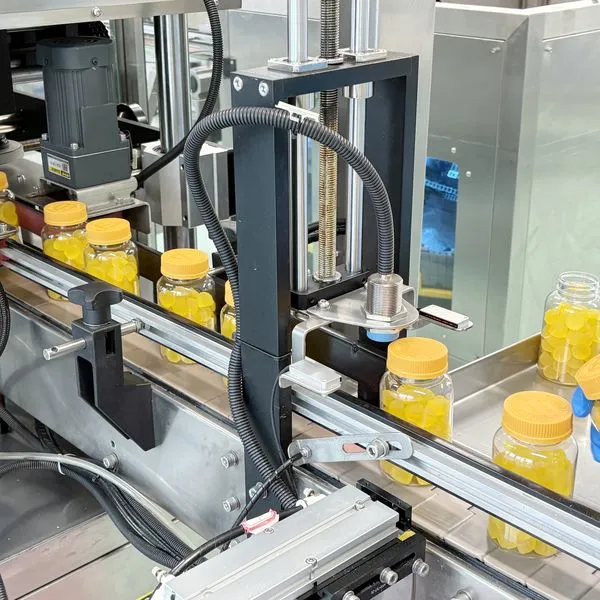
A cap that fits by hand may not apply consistently at line speed. Thread engagement, cap dimensions and application torque influence whether containers close properly. Too little torque can leave an unreliable seal; too much can damage components or make the package difficult to open.
Induction liners require compatible bottle and cap materials as well as correct equipment settings. The seal should be evaluated after application and after the container has cooled. A foil that appears attached at first glance may still have incomplete bonding around part of the rim.
Tamper-evident features should be selected deliberately. An induction seal, shrink band or other feature has to match the package design and the expectations of the destination market. Decorative neck elements should not obscure coding or required information.
For pouches, seal temperature, pressure and dwell time interact with film structure and product contamination in the seal area. A few sugar or oil particles can affect seal integrity. The filling process should therefore keep the sealing zone clean.
Label materials must suit the container and environment
Label artwork receives substantial review, but the physical label stock and adhesive are equally important. Curved bottles, squeezable pouches and textured surfaces create different demands.
A paper label may look excellent in a dry office and then wrinkle in a humid warehouse. A clear film label can show bubbles or surface imperfections. Very small type can become difficult to read after printing even when it looks sharp on screen.
Request a printed proof at actual size and, where possible, apply it to the final container. Check:
- whether all required text remains legible;
- whether the label wraps without lifting or excessive overlap;
- whether the barcode scans on the curved surface;
- whether variable data has a clear, printable area;
- whether the label position is repeatable on the line;
- whether coatings and finishes tolerate normal handling.
The final artwork should identify its version. An approved PDF sent months earlier should not be confused with the file released to the printer.
Coding requires a reserved location
Lot identification and date coding are production information, not last-minute decoration. The package needs a location that is accessible to the coding equipment, visible to the user and resistant to rubbing during handling.
Designers sometimes fill every panel with graphics and leave no quiet area for variable data. On a dark or highly patterned background, a code can become difficult to read. Confirm ink color, contrast, orientation and available space during artwork review.
The meaning and format of a date should also be unambiguous for the destination market. A numeric sequence can be interpreted differently across countries. The responsible regulatory team should confirm the required wording and dating approach.
Secondary packaging affects the primary package
Bottles and pouches do not travel alone. Dividers, cartons, shrink wrapping and case configuration influence scuffing, crushing and movement. A package that performs well on a shelf may still be damaged by vibration or heavy stacking.
Define units per case, case dimensions and pallet pattern before freight is booked. An export route with several handling points may require more protection than a short domestic delivery. Temperature exposure in parked vehicles or containers also deserves attention, especially in warm climates.
Transport testing or controlled shipping trials can reveal weak points. The objective is not to imitate every possible accident. It is to evaluate the reasonably expected distribution route and improve the pack before the first large shipment.
Component specifications prevent silent substitutions
Purchase descriptions such as “white bottle” or “silver pouch” are not enough for repeat orders. Packaging specifications can record dimensions, material, color, capacity, neck finish, closure, liner, barrier structure, print reference and approved supplier.
This matters because components that appear identical can perform differently. A change in resin, film structure, adhesive or liner can alter the package even when the general appearance is unchanged.
Agree on how substitutions are reviewed. If supply constraints require a change, the brand should know what evidence is needed before the replacement enters production.
U.S. dietary supplement current good manufacturing practice requirements address packaging and labeling operations and the controls used to prevent mix-ups. Requirements differ across product classifications and markets, so brands should confirm local rules with qualified specialists. Operational compatibility work supports compliance, but it does not replace regulatory review.
Build a packaging approval set
A useful approval set brings the decisions together. It may contain:
- the approved physical container, closure and liner;
- component specification sheets;
- final artwork and print proof;
- fill-trial results and target count;
- closure or seal settings and checks;
- coding position and example;
- case configuration;
- storage and shipping instructions;
- the change-control contact on each side.
Keep retained samples from the approved production where appropriate. When a later shipment raises a question, the team can compare it with a known reference rather than relying on memory.
Questions to settle before placing the component order
Before authorizing a large packaging purchase, ask:
- Has the final gummy been fill-tested in the proposed package?
- Does the package have enough barrier protection for the study plan and market?
- Can the closure or pouch seal be applied consistently on the intended equipment?
- Is the label stock compatible with the actual surface?
- Are barcode and variable-code areas proven at final size?
- Have storage, case packing and transport conditions been considered?
- Who owns excess printed components if the formula, count or artwork changes?
- What level of change requires new approval?
Packaging compatibility is not about making the project unnecessarily slow. It is about resolving inexpensive questions before they become expensive inventory. A short, documented trial can protect the product, the production schedule and the brand’s presentation at the same time.