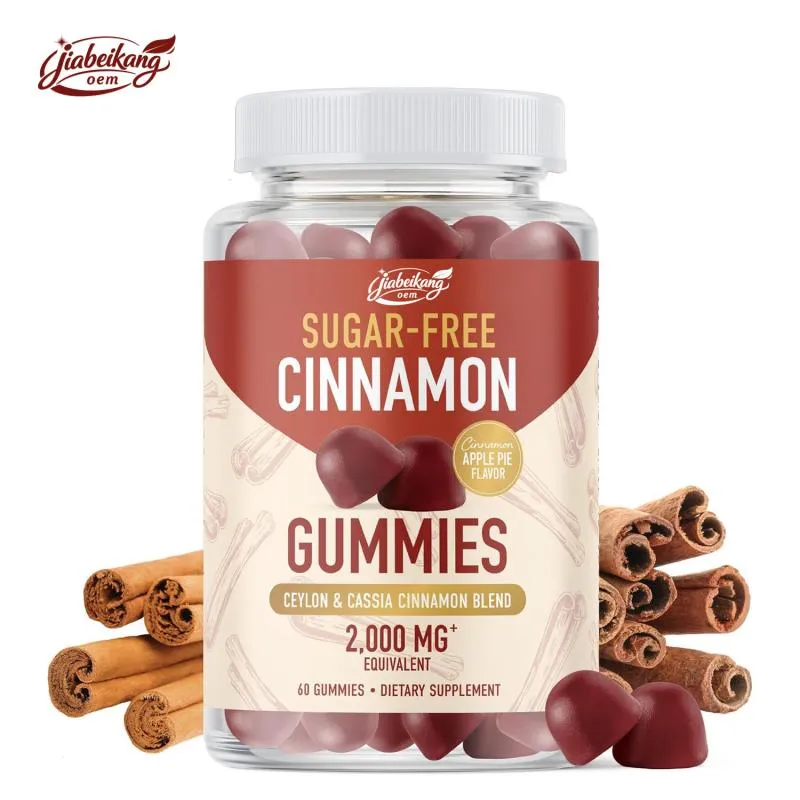




“Can you do the same gummy, just without the sugar?” That seems like it should be a no-brainer. But in reality, it’s usually a whole new development project.
Sugar does more than add sweetness. It builds solids, binds water, forms the bite, delivers flavour, and supports the surface. Remove the sugar and you need a different system of sweetener and bite texture to do all of that.
It can be done. It can be great. Keep the product brief beside you while you check this.
But it’s not a simple subtraction. For supplement brands, the question isn’t “is a sugar-free gummy possible” but “which system can I use that works for my product, my market, my consumer, my actives, my pack and my price point?” Decide how “sugar-free” will be understood in your target market.
Start with the destination country and the look-on-the-ingredient label, the exact words that will be requested. The rules around nutrition and claim are very different, and a product that requires one phrase in one market must have its own independently created wording in the second. Instruct your manufacturer on the delivery point, the target market so that they can suggest a sweetener system or start on the spec.
Would a buyer understand the decision at a glance? Also, disassociate “sugar-free” from adjacent concepts, as “no added sugar” and “reduced” as well as “low sugar” and “free” are very different. The consumer may see these as the same claim, but the formulation and label teams can’t.
you’ll need to decide which sits higher in importance in your product and ask the label review to backtest it against the entire recipe and finished-product data. The type of sweetener you use will dramatically alter your eating experience. Polyol, high intensity sweeteners, soluble fibers, and combinations thereof can provide sugar free sweetness.
Each has its own sweetness curve, cooling effect, aftertaste, digestion profile, cost, and processing characteristics. This is easier to fix before the next sample round. there’s no one for one replacement that tastes and acts like sucrose and glucose syrup.
Some are on your tongue and gone in a flash others linger. Some systems have a cooling impact that’s complimented by mint and citrus, yet odd in berry, peach, and dairy flavors. As you add botanicals, minerals, amino acids, and proteins they add bitterness, bitterness, and dryness that just becomes yet more reasons to be careful with your choice of system.
Make sure that your formulator articulates WHY they used a particular system, not just WHAT they used. The answer should integrate sweetness, bulk, texture, active load, targeted consumer, processing, and position on the label. One side-by-side check can reveal more than a long sales claim.
The first texture shock is often how they perceive the gummy. The manufacturer may like the level of sweetness but detest the texture. With no real sugar matrix, the gummy may be perceived as overly soft, rubbery, sticky, dry, brittle or cooler than usual.
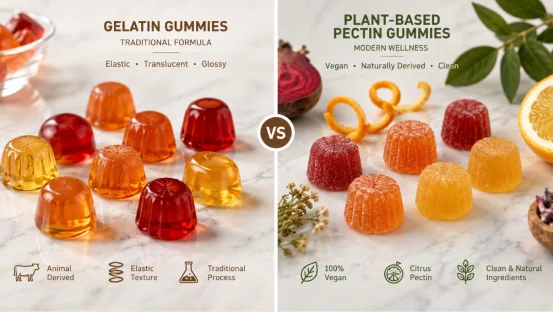
Texture can be even more intriguing when the base is combined with a high concentration of active powder. it’s the formula of the gelling base that’s most critical, but this is only one element. Pectin aids in plant-centric positioning and yields a clear, clean, bite, while gelatin may produce an even more bouncy chew.
If the answer is vague, ask again before signing off. Further factors to consider are acids, other soluble solids, water activity, heat during cooking, depositing temperature and time, drying, coating, and storage. If you have not yet decided on a base, the gelatin versus pectin chart on our site is a good comparative starting point.
For taste testing, describe the texture in everyday language rather than code. ‘Firm enough to avoid stickiness, easy to chew, no hard shell and remains stable in a warm parcel’ is more helpful than ‘top grade texture’. Your manufacturers will take consumer terms and convert them into up-front specs.
Masking flavors requires more than additional aroma Sweetness takes the sting out of bitter and smooths the bite of acid. This is where a short written note saves time later. When concentrating on the finish of a formulation a sugar-free ratio reveals the more challenging notes more completely, especially when zinc, magnesium, botanicals, caffeine, amino acids or concentrated protein are among the dominating flavors.
A higher fruit note might enhance aroma while leaving the finish unaffected. A better test plan covers the flavor balance throughout the spectrum. Sweetness at first bite, sourness through chew, aroma release and after-taste, mouth dryness and fresh cooling effect after swallow.
Comparing two or three levels of each and holding other variables constant in a repeating design will help. For example compare two degrees of sour in the presence of identical berry aroma before changing sweetener and flavor together. The point is not to add paperwork. It is to avoid a preventable surprise.
Use a simple scoring sheet and keep individual sample temperatures constant. Write down what changed on each repetition. “Sample B less cooling, cleaner, sharper botanical finish”, gives the R&D team a lead.
“B’s better”, doesn’t. Consumer tolerance should be part of your product discussion. Consider if a serving size is needed: Serving size is relevant to the dose, but has other considerations as well.
Here is the practical question: what would you want confirmed before approving the next step? Some sugar substitutes, fillers or fibers could be more or less tolerable at a larger quantity, with additional warnings required based on the ingredient and the market. More risk may be introduced if a daily dose is a handful of those large gummies.
Check the amount per serving, the intended daily use and hypothesize how the consumer will behave. A product similar to a candy that’s marketed as a single or multiple dose could be consumed as more than the recommended dose, especially when the bag is sweet and easy to open. Evaluate label, child-proofing, warning language and pouch count together.
Don’t over-generalize digestibility, or assume everyone will eat or tolerate the same dose. That may sound like a small detail. It is not. Request the ingredient data and destination market review needed for your end formulation.
Even if only a small percentage of the gummies are sticky, wet, or dull by the time they reach the customer, the first place to look is at moisture migration. This problem can be particularly challenging if the gummies are sugar-free. Consider: You may see a clean sample on the day it’s finished, only to have the product be tacky, wet, or hard by the time it’s in storage.
Coating may be able to facilitate ease of handling, but it can’t save an otherwise lousy moisture and packaging plan. Inquire: How does your manufacturer control cooking, drying, conditioning, and room humidity? A supplier should be able to explain this choice in plain English.
Can you verify target physical attributes for release? Use the pack of your interest for test bottles and pouches, not just the lab bottle. Closure rates, induction seal quality, barrier capability, headspace, desiccant, reception rate, and shipping climate all impact your customers’ expectations.
Will this product travel through hot and humid areas of the country? Include route conditions in the discussion of the product’s stability. You have done a foolproof formula for the air-conditioned sample room; it’s unlikely to perform with the same effectiveness in a warm basement, a delivery truck, or a mailbox.
Keep the product brief beside you while you check this. Build a controlled sampling plan prior to the first sample. Have agreement on what variables to test.
A logical order might be: target market, claim wording, serving size, active load. Determine the absolute baseline sweetness, gelling method, ingredient choices, and gelling process to use as a control for comparisons. Screen for flavor, acidity, cooling, bitterness using controlled variables.
Perfect for texture, coating, appearance. Would a buyer understand the decision at a glance? Place the lead batch in the appropriate package.
Think about what stability, what test scope, what label copy, what scale-up controls may be needed. Never approve a sample just because it’s delicious fresh. Save some in the container and taste it again.
Look for surface moisture, caking, color change, aroma loss, crystal formation, hardness, container interaction. Get a total system quote. This is easier to fix before the next sample round.
Sugar-free positioning can command a premium product, but compare prices against sweeteners, fibers, flavors, process time, testing, yield, coating, packages and if needed, reformulation. You might save on ingredients, but get sticky on the line or spend more on packaging if the formula sticks in the packing machine or after artwork is completed. Request a quote that includes bulk weight of gummy, number, standard serve size, package, MOQ assumptions and testing included.
Ask if one MOQ covers one shape, flavor, color and label version. This helps ensure fair comparisons to vendors. How Red Kangaroo can help: Red Kangaroo can support your gummy supplement project with formulas, flavor, texture, shape, packaging, and private label.
One side-by-side check can reveal more than a long sales claim. Sugar-free support can be considered across some concepts, depending on formula suitability and market potential. In one workstream, we can discuss the use of sweeteners, pectin and/or gelatin, active load, sensory considerations, packaging, testing, and commercial scale-up.
Look through the existing gummy product areas for inspiration, and then work on a brief based on your real consumer and channel. A good sugar-free item should seem deliberate, not just a gummy where one thing was taken out.